
Some of the dogs remembered most were not the ones whose stories changed overnight.
They were the ones who required another visit.
And another.
For Alexandra and her team, grooming gradually became much more than washing coats and trimming fur. Over the course of the year, their work brought them into the lives of dogs who had been overlooked, confined, or simply living without the care they needed.
Sometimes the transformation was visible immediately.
Sometimes it took years.
But behind every visit was the same simple idea: a dog that had been forgotten was still worth showing up for.
The Dogs They Refused to Forget
Cubo and Bobby were already familiar faces.
They lived in a small village where access to help was limited. Their circumstances were far from ideal, yet their story was not one of a single dramatic rescue followed by an easy ending.
Instead, the team kept returning.
That consistency mattered.
For dogs living in difficult conditions, help is not always one extraordinary moment. Sometimes it is someone remembering where they are, checking again, and refusing to let distance turn into indifference.
Then there was Bukovc.
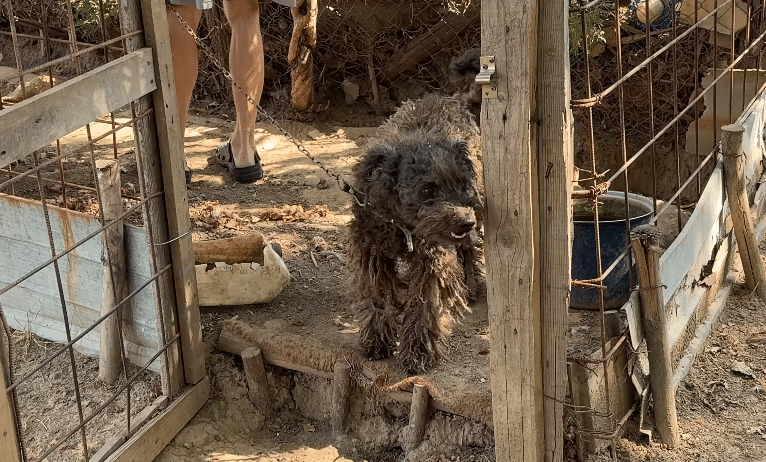
His life had been shaped by confinement, with far too much of it spent on a chain. Reaching him was complicated because his owner, a war veteran, was not someone the team could simply approach without care.
So they chose patience.
They did not walk away because the situation was uncomfortable.
They kept trying to find a way forward.
That quiet persistence became part of the rescue work itself.
When Change Took More Than One Visit
Roxa and Mimi were living in a narrow concrete space that offered little comfort.
Their surroundings seemed almost unchanged by time.
There was no instant transformation waiting around the corner. Their future depended on circumstances changing beyond a single grooming appointment.
Eventually, they did.
Roxa went to live with a caring family member, while Mimi also found a different place to live.
For two dogs whose world had once been so limited, something as ordinary as comfort became meaningful.
A safer place.
More warmth.
More room for life to feel normal.
Their stories showed why rescue work cannot always be measured by what happens on the first day.
Sometimes the real outcome appears much later.
Three Years to Earn One Dog's Trust
Garo presented a very different challenge.
He was a strong guard dog with a defensive nature, and trust did not come easily.
It took three years.
Three years of returning.
Three years of respecting his boundaries.
Three years of proving, through consistency rather than force, that the people approaching him were there to help.
There was no dramatic shortcut.
His story became a reminder that some animals cannot be hurried into trust simply because humans have good intentions.
Patience has to mean something.
And sometimes, it means being willing to keep showing up long after an easier person might have stopped.
Other dogs, including Vaffel and Jerry, faced another kind of problem.
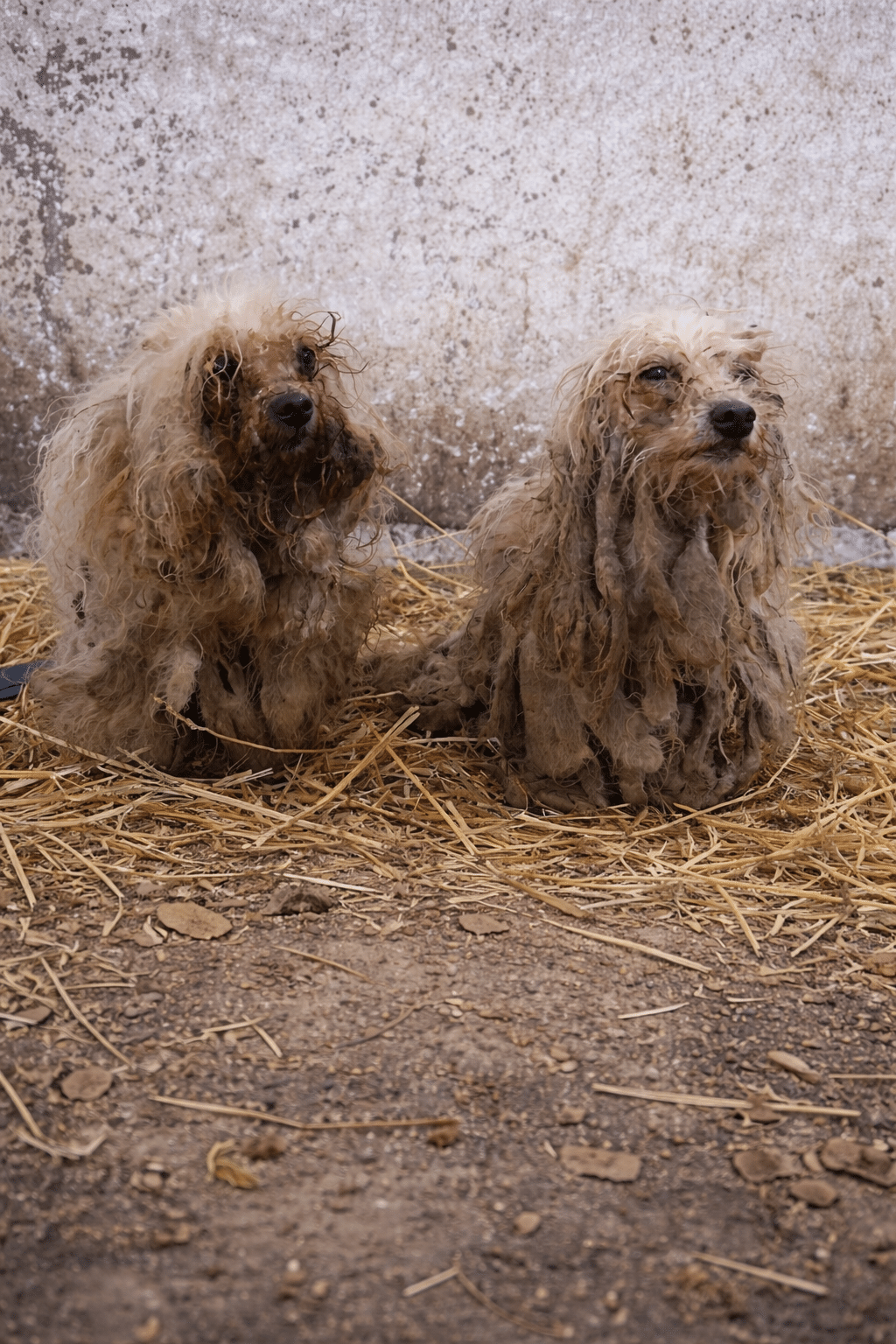
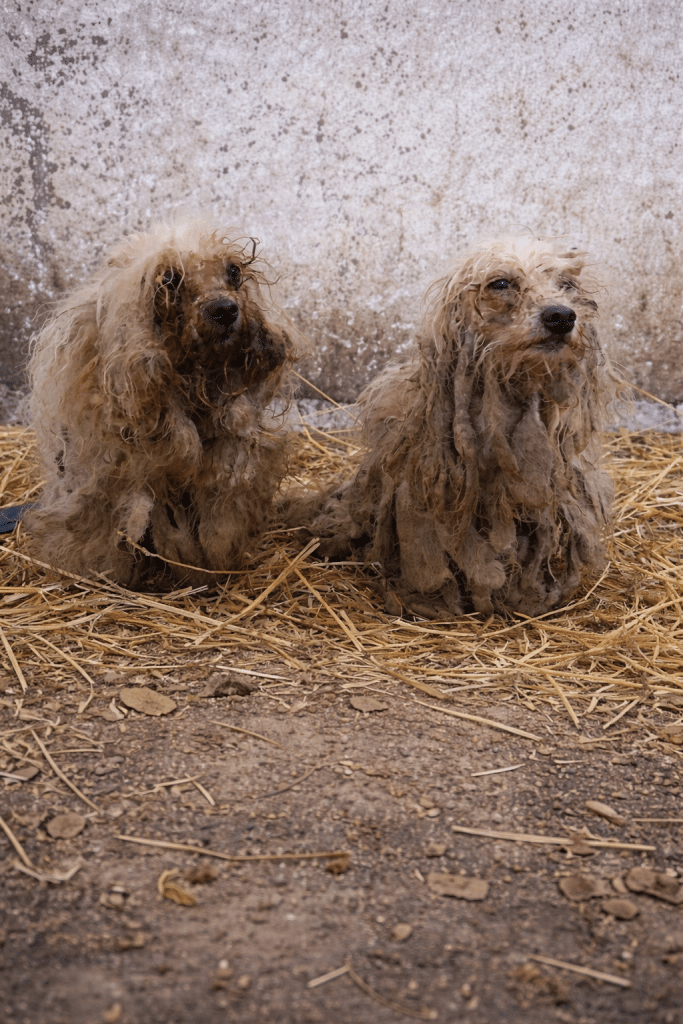
Their badly matted coats had developed not because the source described intentional harm, but because proper grooming knowledge was missing.
Even free assistance was not immediately accepted.
For Alexandra and the team, that created a difficult reality: seeing what needed to change did not always mean they could change it at once.
Compassion sometimes had to wait for permission.
And waiting did not mean giving up.
The Dog Beside the Railway Tracks
Among all the cases they encountered, one was especially difficult to forget.
A dog had been left chained near railway tracks.
Its condition reflected prolonged neglect, and parasites had overwhelmed its body. The scene did not need exaggerated language to make an impact.
The dog was still there.
Still breathing.
Still waiting for someone to notice that its life mattered.
That was enough.
VIDEO: The Dogs Who Were Given a Second Chance — And the People Who Never Gave Up on Them
The footage of these rescues eventually reached a much wider audience.
For some viewers, watching was difficult.
Yet the importance of the story was not found only in how the dogs looked when help arrived. It was found in what happened when people chose not to turn away.
Grooming could remove what years of neglect had allowed to build up.
But the deeper change came from attention.
Someone had finally stopped.
Someone had decided that these dogs should not remain invisible.
Petko Was Found Where Everything Else Had Been Discarded
Petko's story began at a landfill.
It was a place associated with things people no longer wanted, and there he was—alone and easily overlooked.
Yet his beginning did not determine the rest of his life.
Petko survived.
Then his circumstances changed completely.
He found a home.
Not simply somewhere to stay, but a place where he was wanted and cared for.
That contrast made his story especially moving.
A dog once surrounded by what others had thrown away was eventually welcomed somewhere he belonged.
Stories like Petko's also revealed why the team's work had grown far beyond appearance.
A clean coat could be an important first step.
Removing mats could relieve discomfort.
But none of those things existed separately from the larger question: what kind of life would the dog return to afterward?
For some dogs, improvement came through continued visits.
For others, it came through a change in living circumstances.
For Petko, it became a home.
Different journeys.
The same belief that being noticed could open a door.
Then Alexandra's Own Life Began to Change
While the dogs continued to need help, Alexandra's personal life was entering a new chapter.
She was expecting a baby.
Naturally, the pace of the work had to change.
The grooming shop stopped serving regular clients and shifted its attention toward urgent rescue cases—the animals that had few other options.
The mission became narrower, but it did not disappear.
With support from their colleague Jana, the work continued.
It simply had to fit around a new reality.
There is something fitting about that transition.
After spending so much time caring for vulnerable lives, Alexandra was preparing to welcome a new one of her own.
Then the first signs of labor arrived.
Days later, she appeared again holding her baby girl, Ana.
For a team whose year had been filled with dogs needing another chance, it was a deeply personal new beginning.
Life had changed the shape of their work.
It had not changed the reason behind it.
Grooming Was Never Only About Fur
The team still carries a larger hope for the future.
They would like to create a bigger, more complete space where grooming can remain connected to rescue and recovery.
Because in cases like these, grooming is rarely just cosmetic.
For a dog whose coat has been neglected for too long, basic care can restore comfort.
For an animal that has spent years overlooked, gentle handling can become part of learning that human contact does not always mean something frightening.
And for the people involved, a grooming appointment can reveal a larger problem that might otherwise remain unseen.
That is what makes this work different from an ordinary service.
The scissors and clippers are only tools.
The real work is recognizing when a dog needs more than a haircut—and deciding that its circumstances are worth caring about.
The Next Dog Is Still Out There
Cubo and Bobby were remembered through repeated visits.
Bukovc required patience before help could move forward.
Roxa and Mimi eventually reached better living situations.
Garo needed years before trust could grow.
Vaffel and Jerry showed how lack of knowledge can create suffering even when the answer seems simple from the outside.
One dog waited near railway tracks.
Petko began at a landfill and ended up with a home.
Each story was different.
None of them was solved by a single formula.
That may be the clearest lesson from Alexandra and her team's journey.
Rescue is not always one dramatic moment when everything changes.
Sometimes it is returning.
Sometimes it is waiting.
Sometimes it is explaining.
Sometimes it is offering help again after the first offer was refused.
And sometimes it is simply refusing to accept that an overlooked dog should remain overlooked forever.
Their work continues in a different rhythm now, shaped by Alexandra's new life as a mother and by the decision to focus on dogs in urgent need.
But the heart of the mission remains the same.
Somewhere, another dog is still living in circumstances most people never see.
And sometimes the beginning of a second chance is nothing more complicated than someone choosing to look—and then choosing to stay.


