
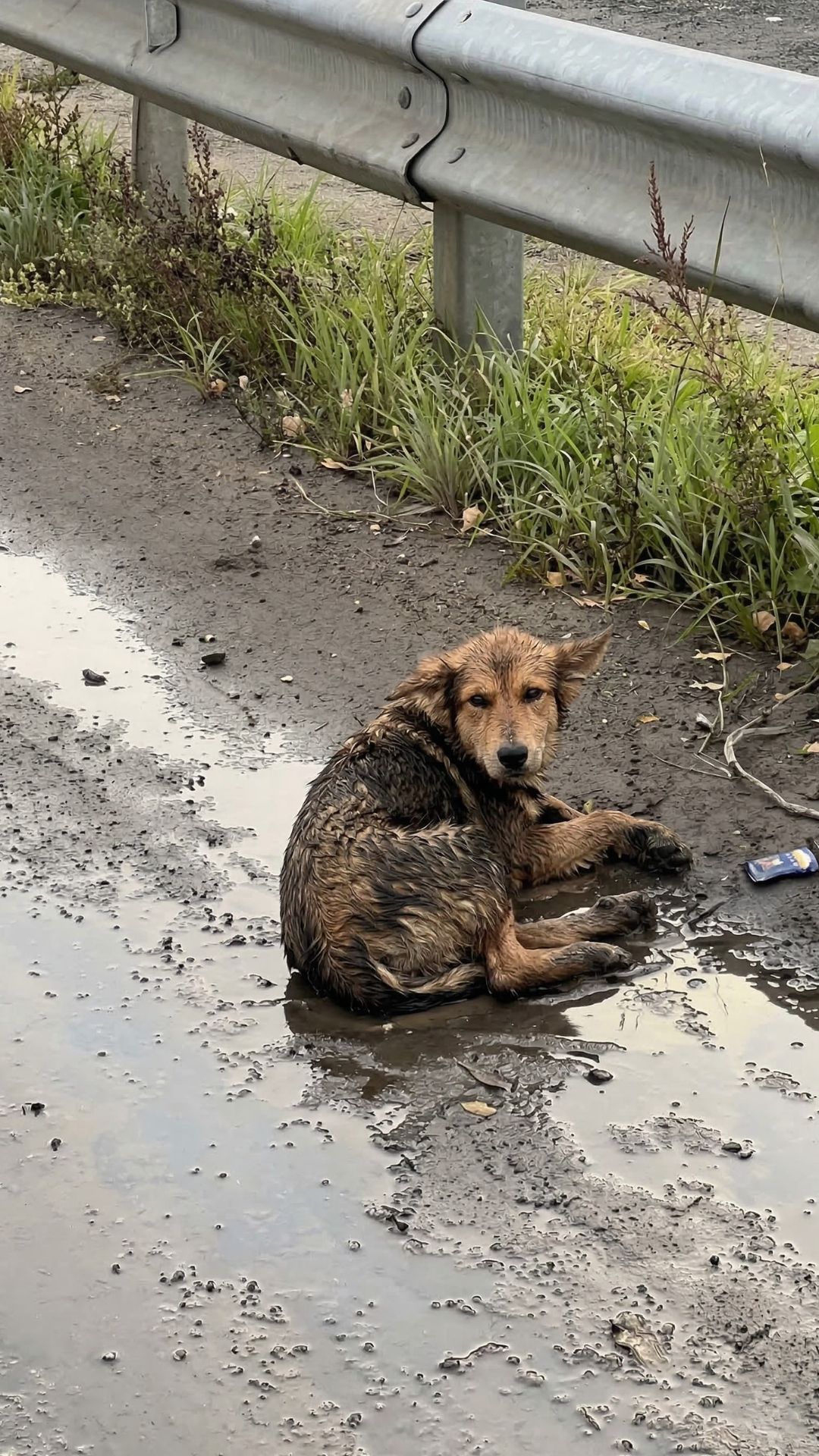
Rain covered the road where Harvard lay unable to move.
His small body was soaked, and the injuries from a serious accident had left him exposed on the pavement. He could not simply get up and search for somewhere safer.
So he did the only thing he still could.
He cried out.
The sound was faint and repetitive, carrying through the damp air as the world continued around him. There was no way for Harvard to know whether anyone would notice or whether another vehicle would simply pass by.
For a dog in that condition, everything depended on someone choosing to stop.
When Help Still Looked Like Danger
By the time rescuers reached Harvard, his fear was immediately clear.
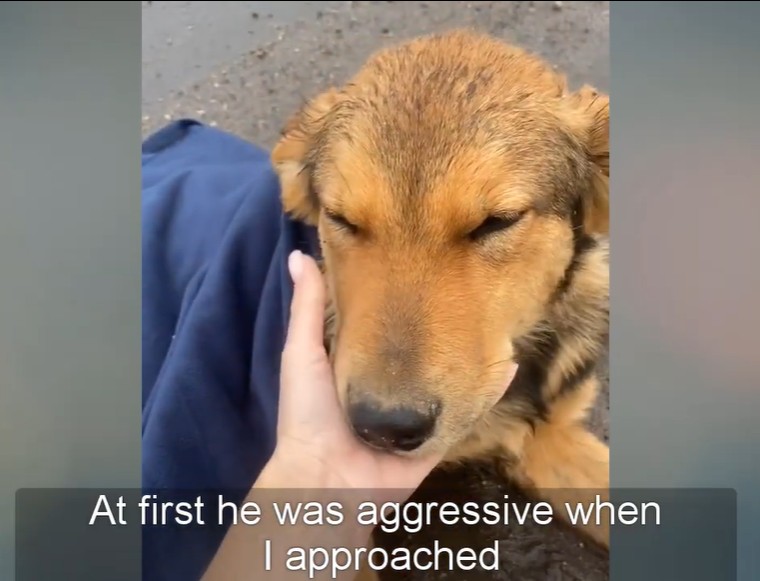
He did not greet the people approaching him with relief. Instead, he growled.
It was not difficult to understand why.
Harvard was injured, unable to escape, and surrounded by unfamiliar people. An outstretched hand could not automatically mean comfort to him. In that moment, protecting himself was one of the few choices he still had.
The rescuers did not rush him.
They stayed close, lowered themselves beside him, and spoke gently. Their movements remained careful as Harvard watched them.
Little by little, the tension began to ease.
The growling stopped.
His body became less rigid.
Eventually, Harvard allowed them to touch him.
That small change mattered enormously. Nothing about his physical condition had improved yet, but something important had happened between the frightened dog and the people trying to save him.
He had allowed help to come closer.
VIDEO: Injured on a Rainy Road, Harvard Begins His Long Fight to Stand Again
The journey to the veterinary clinic brought another layer of uncertainty.
Every movement had to be handled carefully because the full extent of Harvard's injuries was still unknown. One concern was especially serious: whether the accident might have affected his spine.
If it had, his ability to walk again could be at risk.
There was no answer yet.
Only the hope that the damage, however serious, could still be treated.
The X-Rays Revealed How Much His Body Had Endured
At the clinic, Harvard was examined under bright veterinary lights.
The staff called him a brave boy, and the description seemed fitting. He had already endured the accident, the rain, the fear of being approached, and the painful trip to safety.
But the examination showed that his recovery would not be simple.
X-rays revealed several significant injuries.
Harvard had a badly fractured leg.
He also had a complicated pelvic fracture.
In addition, there was internal bruising affecting his urinary system.
The findings explained why he had been unable to move on the road. His body needed more than rest. He required careful medical treatment, pain management, and surgery.
There was also one question that remained larger than all the others.
Would he be able to stand again?
No one could promise an easy answer.
The first stage of treatment focused on stabilizing Harvard and managing his pain while the veterinary team prepared for the procedure ahead. Recovery would take time, and there was uncertainty surrounding how much function he would regain.
For Harvard, healing had only begun.
Surgery Was Only the Beginning
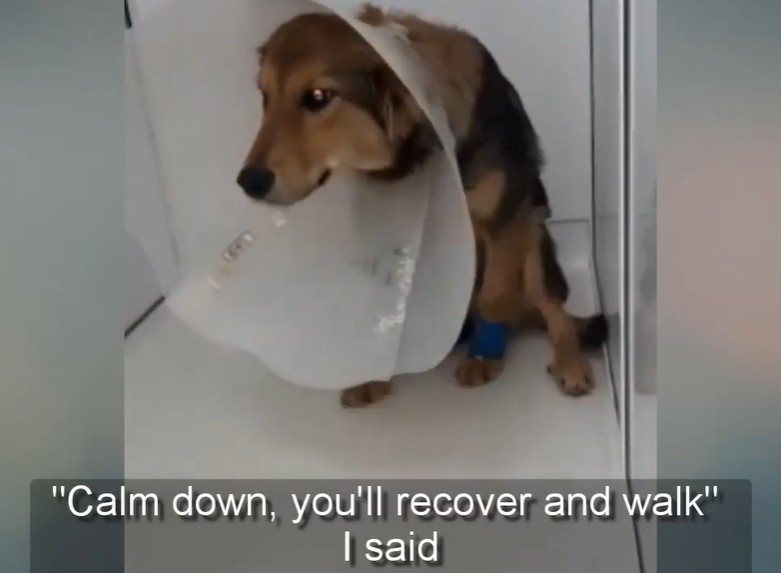
Harvard's surgery was successful.
That was an important milestone, but it did not mean his body could immediately return to normal.
When the anesthesia wore off and the early recovery period began, Harvard faced a completely different challenge.
He had to learn what his recovering body could do.
He tried to rise.
He could not.
Later, he tried again.
Still, his legs would not support him the way he wanted.
There was no dramatic transformation overnight. There was simply a dog recovering from serious injuries and caregivers encouraging him through a difficult process.
“Easy, boy,” they told him.
“You'll get there.”
The words could not make his fractures disappear, but the people around Harvard could give him something else: time.
No one demanded more than he could manage.
No one walked away because progress was slow.
The work of recovery continued one attempt at a time.
Then His Legs Held Him Up
A few days later, Harvard tried again.
This time, something changed.
He pushed himself upward.
His legs trembled beneath him. His body was still unsteady, and he could not remain upright for long.
But he was standing.
For only a few seconds, Harvard held himself above the ground under his own strength.
After everything that had happened on the road, those seconds carried enormous meaning.
Standing did not mean that recovery was complete. He still needed healing, care, and time.
But it was the clearest sign yet that his body was responding.
The dog who had once been unable to move on the wet pavement had found his feet again.
As the days continued and his surgical stitches were eventually removed, another change became visible.
The distant expression from the roadside began to disappear.
Harvard seemed more alert and engaged with the people around him. The fear that had once made him growl at an approaching hand no longer defined every interaction.
Physical healing and emotional trust were beginning to move forward together.
A New Place to Learn What Safety Felt Like
Eventually, Harvard was able to leave the hospital and continue his life in a home.
The change in surroundings represented more than a change of address.
On the road, he had been injured and unable to protect himself.
At the clinic, nearly every part of his day had revolved around examinations, treatment, surgery, and recovery.
Now he could begin experiencing ordinary things again.
He entered his new home with greater confidence than the frightened dog rescuers had first approached.
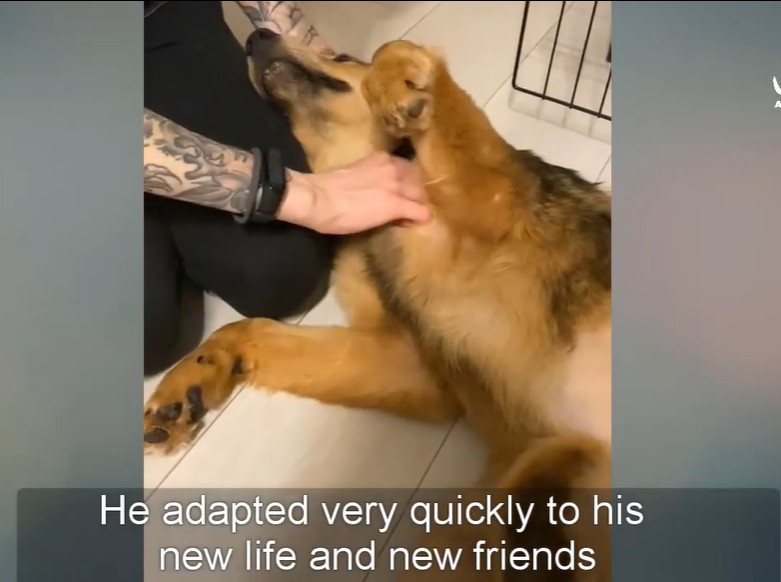
There were other dogs to meet.
Some were curious.
Some were cautious.
Harvard gradually learned how to exist among them and settle into the rhythm of his new environment.
There were no dramatic milestones in many of these moments.
And that was exactly what made them meaningful.
A hand gently scratching behind his ears.
A comfortable place to rest.
The predictable routine of a home.
For an animal whose recent life had been shaped by pain and uncertainty, ordinary comfort could become part of healing too.
The Trust He Offered Became Part of His Recovery
Harvard's transformation was not only visible in the way he moved.
It could also be seen in the way he responded to people.
When rescuers first approached him, he had warned them away.
That reaction made sense. He was badly injured and vulnerable, and he had no reason to immediately understand that unfamiliar hands were there to help.
Trust came gradually.
First, the growling stopped.
Then he accepted touch.
Later, he allowed people to care for him through examinations, surgery, and recovery.
None of those moments erased what had happened to him.
They simply showed that fear did not have to remain permanent.
Harvard's progress also showed how uneven recovery can be.
There was the frightening uncertainty of his first examination.
There were failed attempts to stand.
There were days when the only meaningful progress might have been another period of rest and healing.
And then there was that brief moment when his trembling legs finally supported him.
Small steps mattered because they were real.
From a Rainy Road to a Life in Motion
Today, Harvard can run and play.
That outcome is difficult to separate from the image of where his journey began: lying injured on a rain-soaked road, unable to move and calling out into the evening.
His body had been seriously damaged.
His recovery required veterinary treatment, surgery, patience, and repeated attempts to stand again.
But he was given the opportunity to heal.
Harvard's story is a reminder that rescue is rarely a single dramatic moment.
Stopping for an injured animal is only the beginning.
There is the careful approach.
The uncertain trip to a clinic.
The difficult diagnosis.
The treatment.
The quiet hours of recovery.
And sometimes, there is a trembling first stand that lasts only a few seconds but changes everything.
Harvard could not know any of that while he lay on the road.
He only knew that he was hurt and afraid.
Then someone came close enough to hear him.
And instead of passing by, they stayed.
That decision gave Harvard the chance to move from fear toward trust, from immobility toward movement, and from a cold stretch of pavement toward a life where he could finally run again.


