
The bark was so faint that Tom Hudson could easily have mistaken it for something carried across the water.
He was several days into a demanding solo canoe journey through the backcountry of Manitoba, Canada, documenting the expedition for his YouTube channel, “What In The World.” After hours of paddling through an isolated landscape, he expected little more than the sounds of the river and surrounding wilderness.
Then he heard it again.
A weak bark came from somewhere beyond the reeds along the riverbank.
Tom stopped paddling.
There was no obvious reason for a dog to be in such a remote place, and the sound did not seem strong or close. He could have continued downstream and assumed the animal belonged somewhere nearby.
Instead, he turned his canoe toward the shore.
That decision brought him to Ivy.
A Patch of White in the Mud
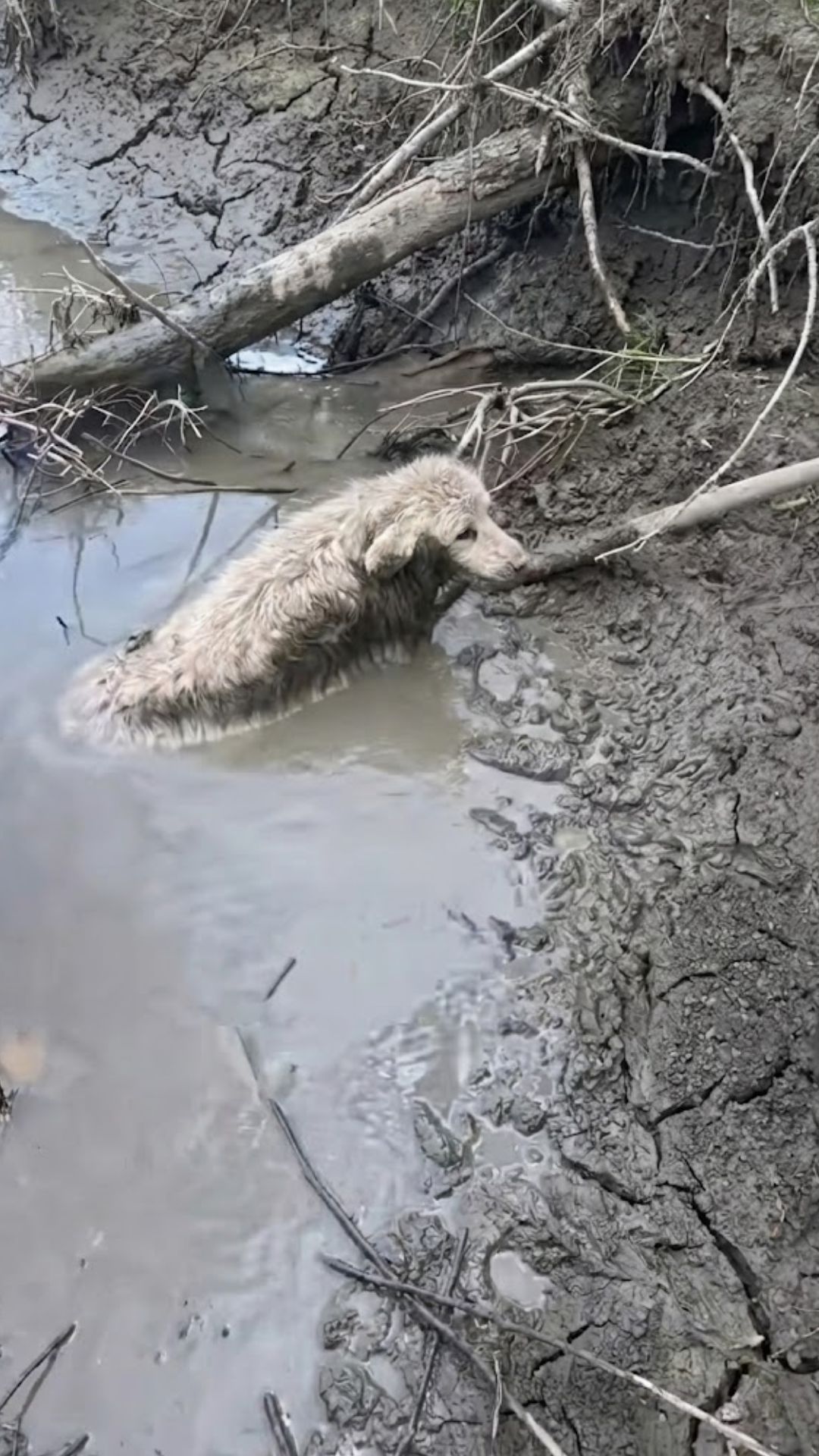
Moving closer to the bank, Tom searched through the reeds and dark mud until something pale caught his attention.
At first, it was difficult to understand what he was looking at.
Then the white shape moved.
It was a dog.
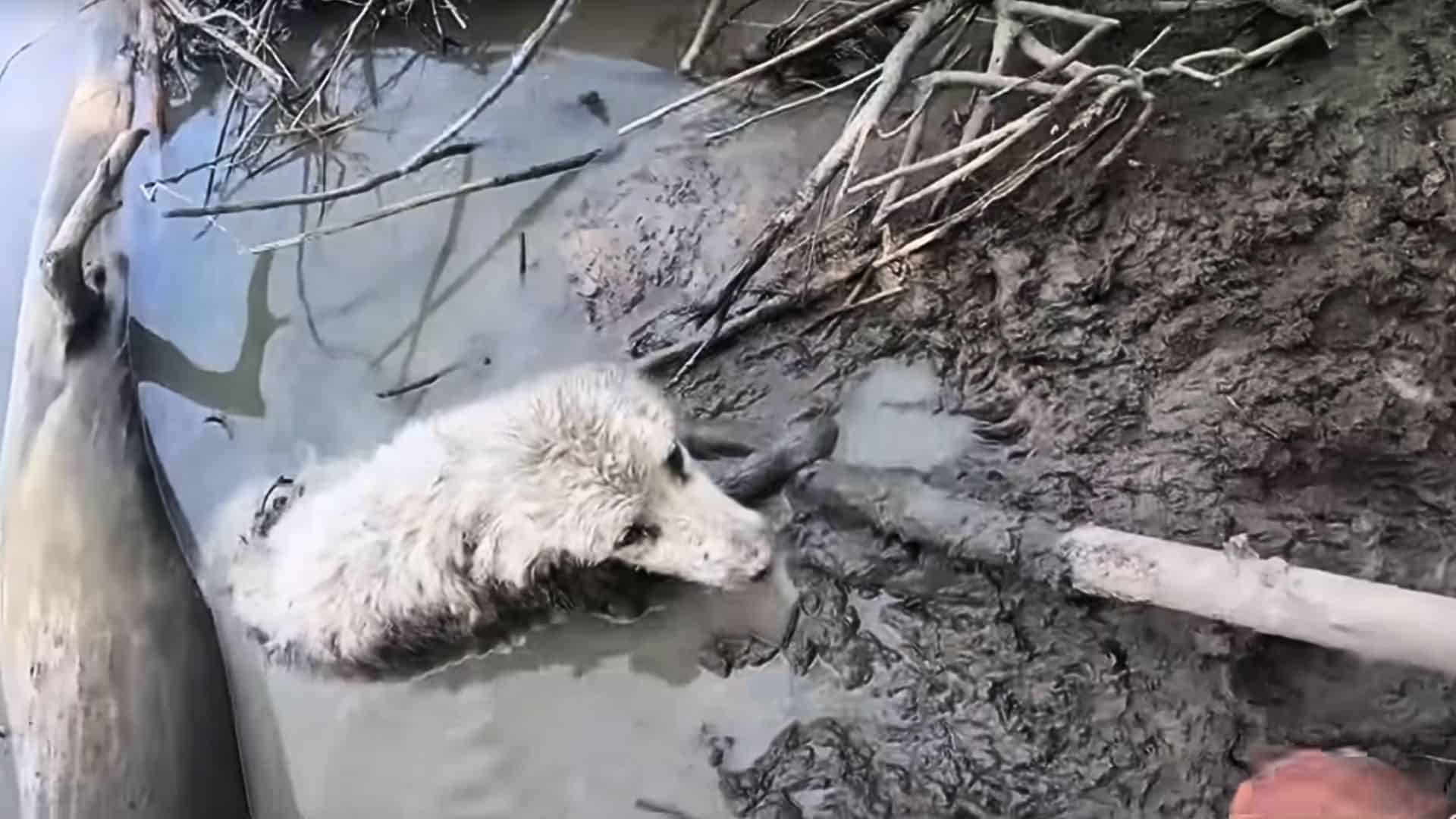
Ivy was a 14-year-old Great Pyrenees, and she was in serious trouble. Part of her body was in the cold river, while mud and a fallen log had left her unable to free herself.
Her thick white coat had become soaked and coated with dark sludge. Her hind legs were exhausted, and she had very little ability to move.
According to the account, Ivy had likely been trapped there for close to two days.
For an older dog already struggling against cold water, heavy mud, and fatigue, every passing hour mattered.
Tom spoke gently as he approached.
Ivy did not try to run. She could not.
She remained where she was, shivering as the stranger in the canoe came closer.
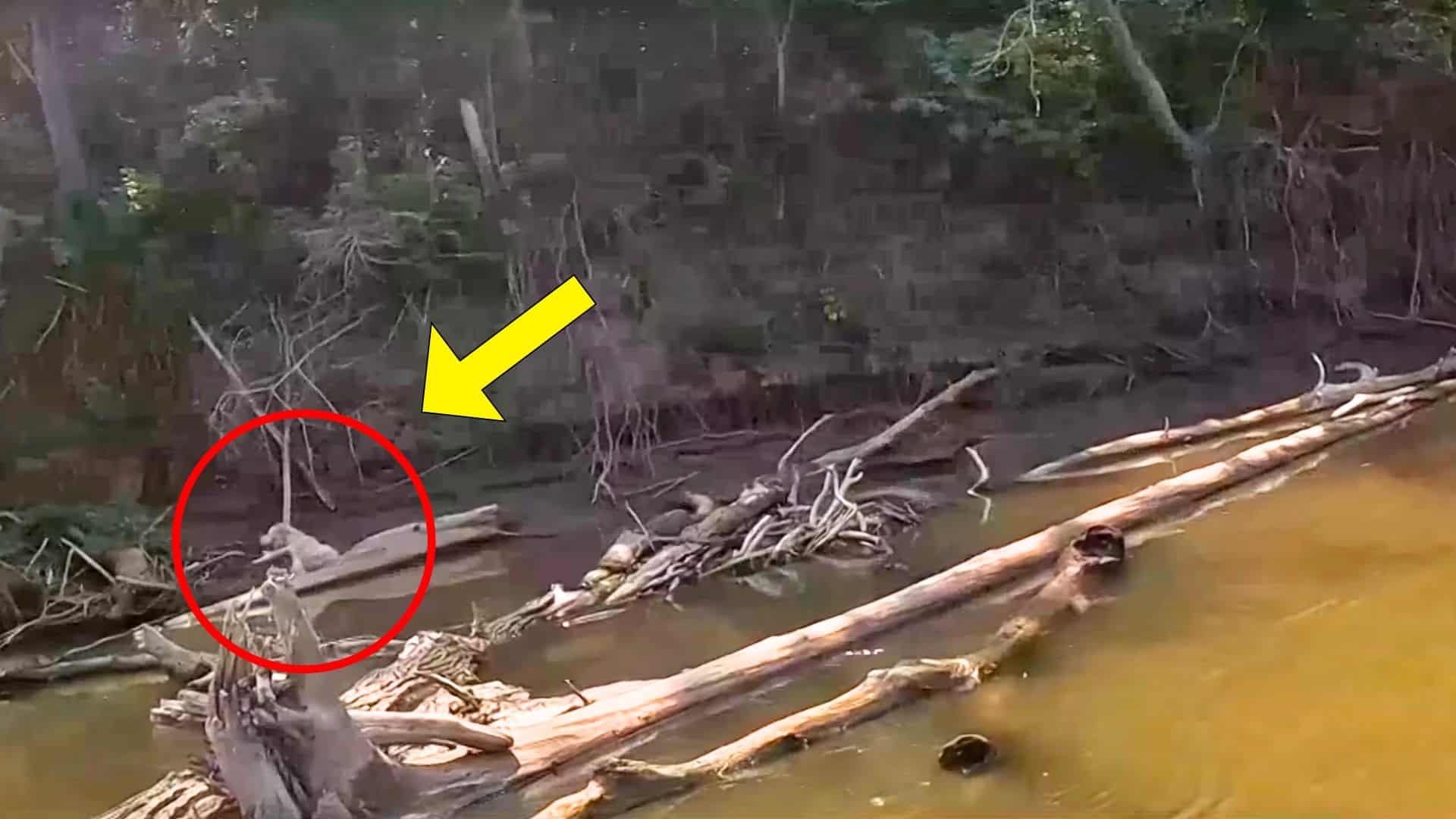
From a distance, she had been little more than a white shape against the riverbank. Up close, the severity of her situation became impossible to miss.
Ivy needed to be lifted free.
But reaching her was only the beginning.
Stepping Into the Mud to Reach Her
Tom first had to figure out how to move a large Great Pyrenees from the riverbank into a narrow canoe.
Trying to pull her from inside the boat was not going to work. The position was awkward, and Ivy was too exhausted to assist him.
So Tom climbed out.
His boots immediately sank into the deep mud.
The same riverbank that had trapped Ivy now made every movement difficult for the person trying to save her. Tom had to maintain his own balance while getting close enough to place his arms around the dog.
Ivy was soaked, heavy, and lodged firmly in the mud.
Tom pulled.
She barely moved.
He changed his position and tried again, working carefully as the mud resisted every attempt to free her.
There was no quick solution.
He simply kept trying.
Gradually, Ivy began to come loose. After several exhausting attempts, Tom was finally able to lift her out of the place where she had been trapped and maneuver her toward the canoe.
It was the first real turning point since he had heard that weak bark from the river.
The dog who had been unable to move was finally leaving the water.
VIDEO: A Faint Bark Led Him to Ivy — Then He Stepped Into the Mud to Pull Her Free
From the Riverbank Into the Canoe
Getting Ivy free did not mean she could suddenly stand or walk away.
She was still exhausted.
Tom managed to lift her over the side of the canoe, where she could finally rest away from the mud and river that had held her in place.
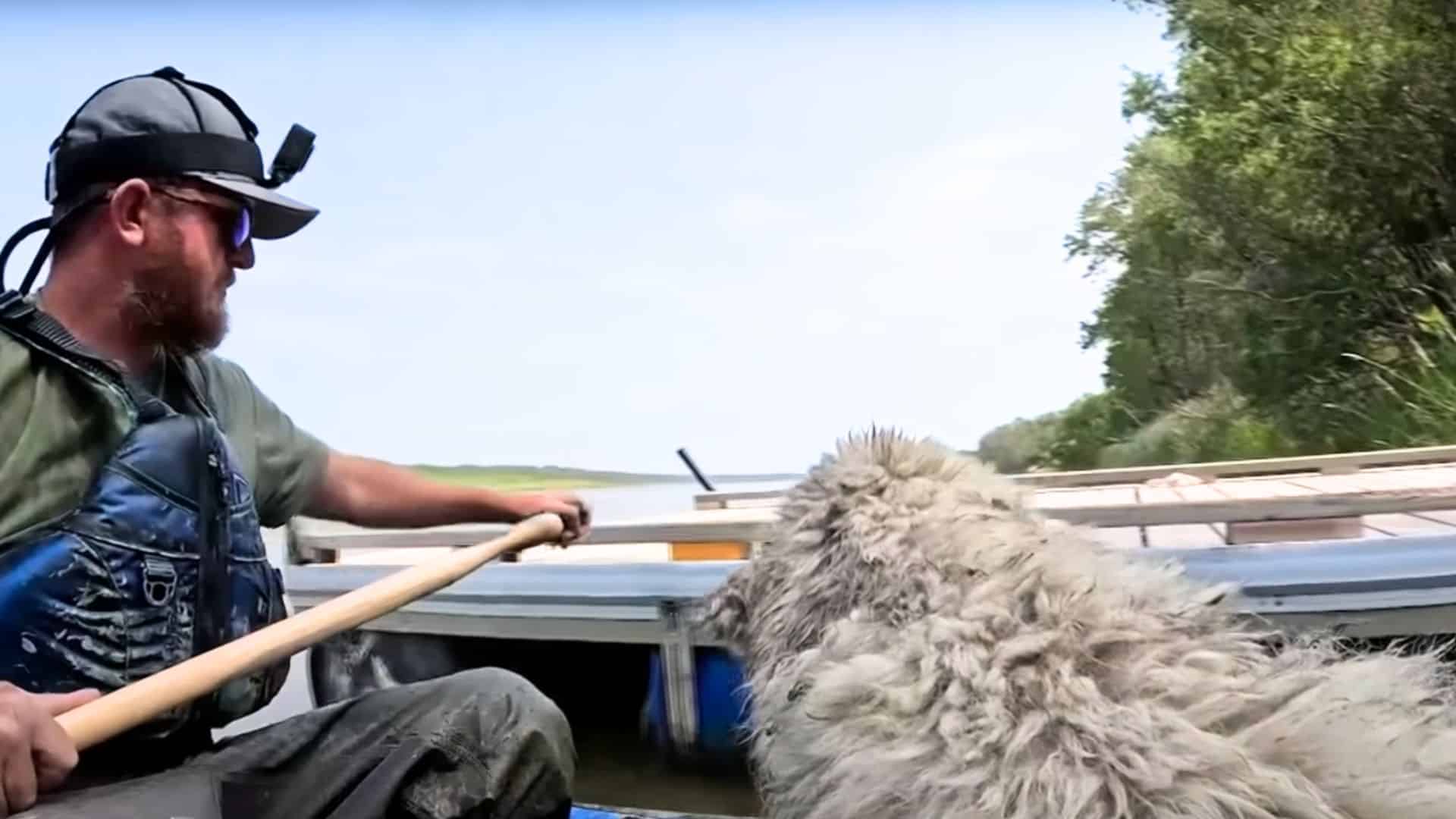
Covered in sludge and still shivering, Ivy was nevertheless somewhere very different from where she had been only moments earlier.
She was no longer trapped.
Now Tom faced another problem.
He had found a dog in a remote stretch of wilderness, but he did not know where she had come from or whether anyone was searching for her.
Then he noticed another clue along the shoreline: paw prints.
Tom began following the riverbank, looking for any sign that might connect Ivy to a nearby home.
About 300 yards away, he saw a dock.
In a landscape where clues were scarce, it was enough to investigate.
A Knock on the Door Changed Everything
Tom went up from the dock and approached a nearby house.
When Tom Stait and his wife, Janine, answered the door, Hudson explained what had happened.
He had found a large white dog trapped in the mud beside the river.
The couple immediately understood.
The dog was Ivy.
She was theirs.
For two days, the Staits had been looking for her. They had searched the surrounding area and repeatedly called her name, but they could not find her.
The section of riverbank where Ivy had become trapped was difficult to see and hard to reach. She had been close enough to a home to have people desperately searching for her, yet hidden well enough that those searches had not led to her.
By the time Hudson arrived at the door, the family had feared that they might never see her again.
Instead, a stranger traveling alone by canoe had heard the sound they could not.
A small bark from the river had finally connected Ivy with the help she needed.
Bringing Ivy Home Was Only the Beginning
Ivy was too weak to simply walk home on her own, so she was carefully brought back to safety.
Her family gave her food, water, warmth, and a place to rest.
But one very visible reminder of what had happened remained.
Her long white coat was still filled with thick river mud.
Hudson could have continued his journey once Ivy was reunited with her family. Instead, he stayed and helped clean her.
Layer by layer, the mud was washed away.
It was a quiet continuation of the rescue.
Saving Ivy had required strength at the riverbank, but helping her afterward meant something simpler: staying long enough to finish what had begun when Tom first turned his canoe around.
The Staits invited him to remain for the night.
Only hours earlier, Hudson had been alone on a cross-country canoe expedition. Now he was sharing a meal with the family of the dog he had happened to hear from the water.
The unexpected encounter had connected people who otherwise might never have met.
And at the center of it all was Ivy.
Washing Away the Last Signs of the River
Ivy's coat had carried the evidence of her ordeal home with her.
After being cleaned, she later received grooming that helped remove the remaining traces from her thick fur.
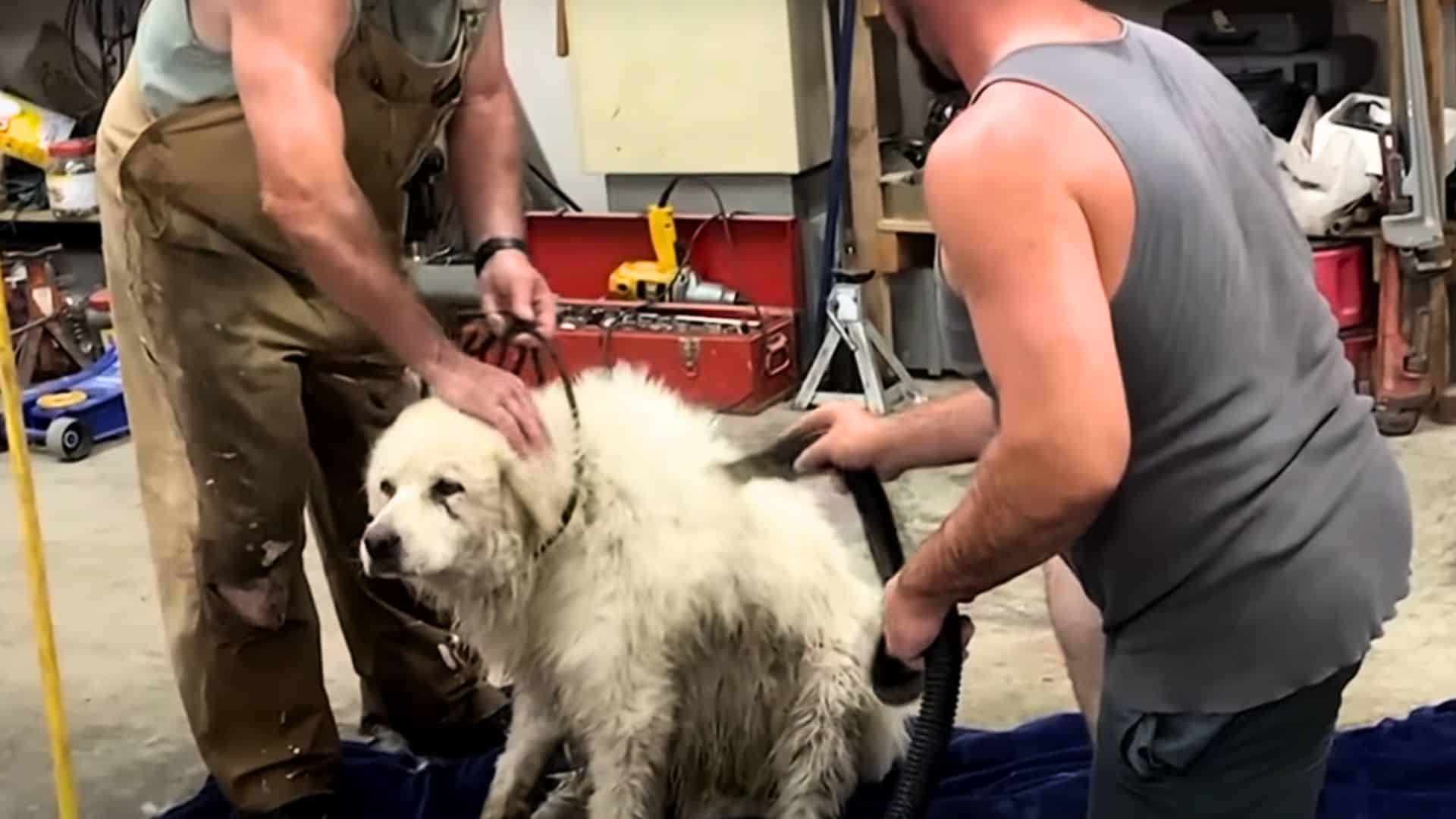
The transformation was not about changing who Ivy was.
It was about seeing the familiar family dog emerge again from beneath the mud that had covered her.
By the following morning, Ivy was resting beneath the family truck, described as one of her favorite places.
After everything that had happened beside the river, the ordinary sight carried special meaning.
She was back in familiar surroundings.
She was clean.
And most importantly, she was home.
For her family, the two-day search was over.
For Hudson, the canoe journey was about to continue.
The Rescue That Stayed With the Journey
Tom Hudson eventually returned to the water and continued his solo trip across Canada.
But Ivy's rescue became part of the story of that expedition.
Viewers who later watched the encounter on YouTube saw how an ordinary moment of attention changed the outcome for an animal hidden along an isolated riverbank. Some even suggested that Hudson give his canoe a new name: “Ivy.”
It would be a fitting reminder of the day he stopped paddling because of a sound that would have been easy to ignore.
There was no rescue team waiting nearby and no complicated plan.
There was one traveler.
One faint bark.
And one decision to investigate instead of continuing down the river.
Had Hudson dismissed the sound, he might never have known Ivy was there.
Instead, he turned around, pushed toward the bank, stepped into the mud, and kept pulling until she was free.
For Ivy, that pause in someone else's journey became the way back to her family.
And for everyone who followed the story afterward, it offered a simple reminder: sometimes compassion begins with nothing more dramatic than noticing that something is wrong—and choosing not to pass by.


