
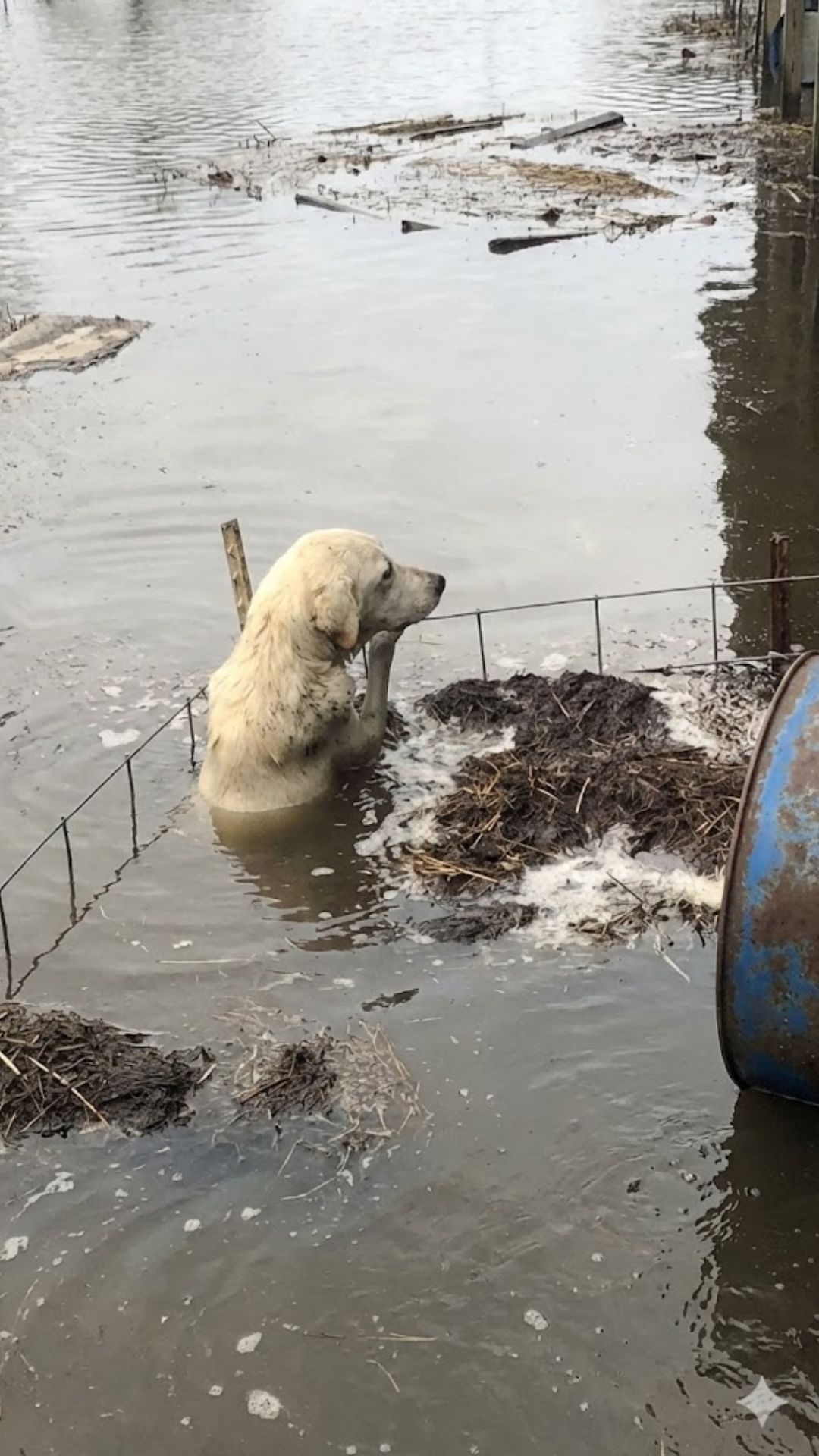
Rain kept falling across southern Louisiana until streets disappeared beneath muddy water and communities were forced into crisis.
Families were trying to protect their homes, locate loved ones, and find pets separated during the flooding. Local shelters suddenly faced another emergency: an enormous number of displaced animals needed somewhere safe to go.
But there was another group already inside those shelters.
They were the dogs who had been waiting before the disaster began.
Strays. Abandoned pets. Animals without families searching for them.
As emergency kennels filled, those dogs needed more than patience. They needed space, transportation, and people willing to help from far beyond the flood zone.
The Dogs Who Could Easily Have Been Overlooked
Before the flooding, shelters across Louisiana were already caring for unwanted dogs hoping for another chance.
Then the storm transformed the situation almost overnight.
Beloved pets became separated from their families during evacuations and flooding. Shelters had to make room for animals whose owners might be desperately trying to find them.
That created a difficult problem.
The dogs who had already been available for adoption still needed care, but every kennel they occupied was a kennel that could not be used for a newly displaced family pet.
Moving those shelter dogs to another region could help both groups at once.
The animals without owners searching for them could continue toward foster care or adoption elsewhere, while Louisiana shelters would gain valuable room for emergency reunification efforts.
Help would have to come from a long way away.
An Offer From More Than 1,000 Miles North
In Pennsylvania's Lehigh Valley, Liz Jones of the Sanctuary of Haafsville was following what was happening in Louisiana.
She saw reports of flooded communities, strained shelters, and rescuers trying to respond to an extraordinary number of animals needing assistance.
She could not change the weather.
But she could help create space.
Jones contacted partners in Louisiana with a straightforward offer: shelter dogs who did not have families searching for them could be transported north.
It was an act of compassion, but it also served a practical purpose.
Every dog relocated from a crowded Louisiana shelter created another opening for a displaced pet that might soon be reunited with its owner.
One rescue transport could therefore affect far more animals than the passengers inside the van.
It could give waiting shelter dogs a new opportunity while also helping flood-zone shelters handle the emergency unfolding around them.
VIDEO: Shelter Dogs Left the Louisiana Flood Zone on a 25-Hour Journey Toward Safety
Twenty-Two Dogs Begin a 25-Hour Journey
In Louisiana, rescuer Greta Jones prepared for the long drive north.
Inside the transport vehicle were 22 secured crates.
Each held a dog whose future had suddenly changed.
Instead of remaining in an increasingly strained shelter system during the flood emergency, the dogs were heading toward Pennsylvania, where foster families and supporters were waiting.
The journey would take approximately 25 hours.
For the dogs, the transport was the bridge between two completely different circumstances: overcrowded shelters affected by a regional disaster and a network of homes prepared to receive them.
For Greta Jones, it meant remaining on the road through a demanding trip because the animals needed someone willing to make the distance.
Her explanation was simple.
“For the babies,” she said. “For the fur babies. They’re loving individuals. We love them.”
There was no complicated reason behind the drive.
The dogs needed somewhere to go.
Someone chose to take them there.
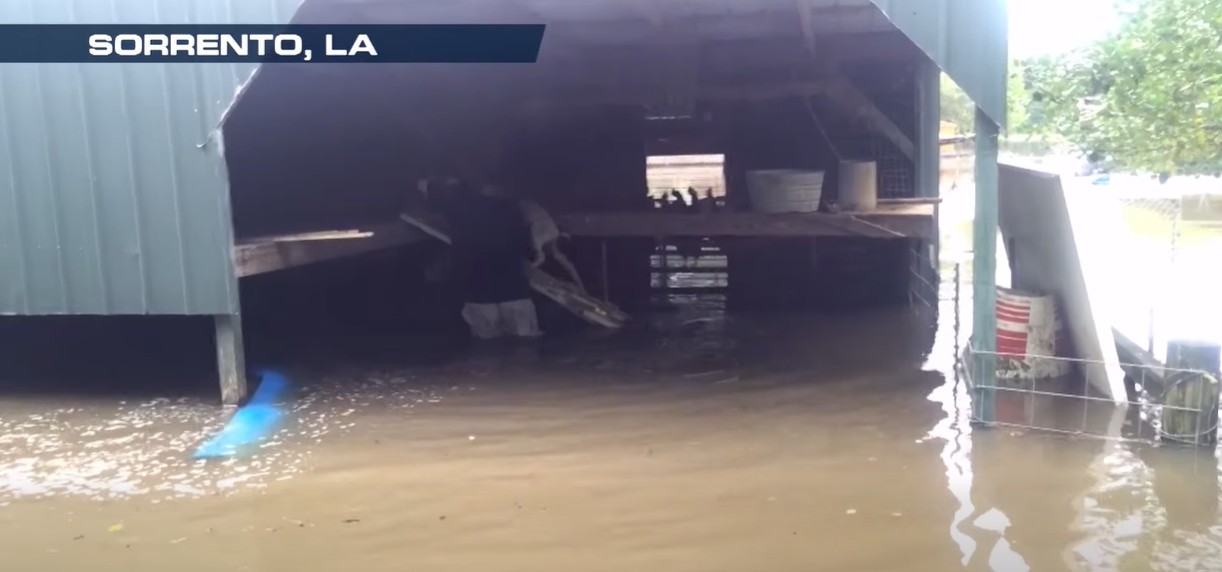
A Late-Night Arrival and People Ready to Help
By late Friday night, the transport finally reached the Lehigh Valley.
The dogs did not arrive to an empty parking area with nowhere else to go.
People were waiting.
Foster families organized through the Sanctuary of Haafsville had come prepared to take the animals into their homes.
They did not know every dog's history. Many were meeting these animals for the first time.
Still, they had chosen to be there.
Among those participating were Eric Dams and his wife. Their decision to help was connected personally to the disaster unfolding hundreds of miles away.
They had friends and relatives in Baton Rouge, one of the communities affected by flooding.
From Pennsylvania, they could not repair the flooded houses or solve the enormous problems facing Louisiana families.
But they could help one animal displaced by the shelter crisis.
That was enough reason to open their home.
Their choice reflected the larger rescue itself.
No individual person could fix everything the flood had changed.
But each person could make one part of the situation a little easier.
From Transport Crates to Foster Homes
After such a long journey, the most important change for the dogs was simple: they had somewhere safe to go next.
As the crates were opened, some dogs emerged cautiously into unfamiliar surroundings.
Others responded more quickly to the people waiting for them.
Each dog was entering another transition, but this one offered something the overcrowded shelters in Louisiana could no longer guarantee during the emergency — individual space and a home environment.
For animals accustomed to shelter kennels or uncertain circumstances, ordinary household comforts could represent an entirely different kind of life.
A quiet room.
A place to rest.
Regular meals.
People nearby who had volunteered specifically to care for them.
The foster network meant the dogs would not simply be transferred from one crowded facility to another.
They would be given time in homes while their futures were determined.
And for several of them, that future changed almost immediately.
By the end of the night, three dogs had already been adopted.
Within hours of completing the long trip from Louisiana, they were no longer waiting in shelters.
They had families.
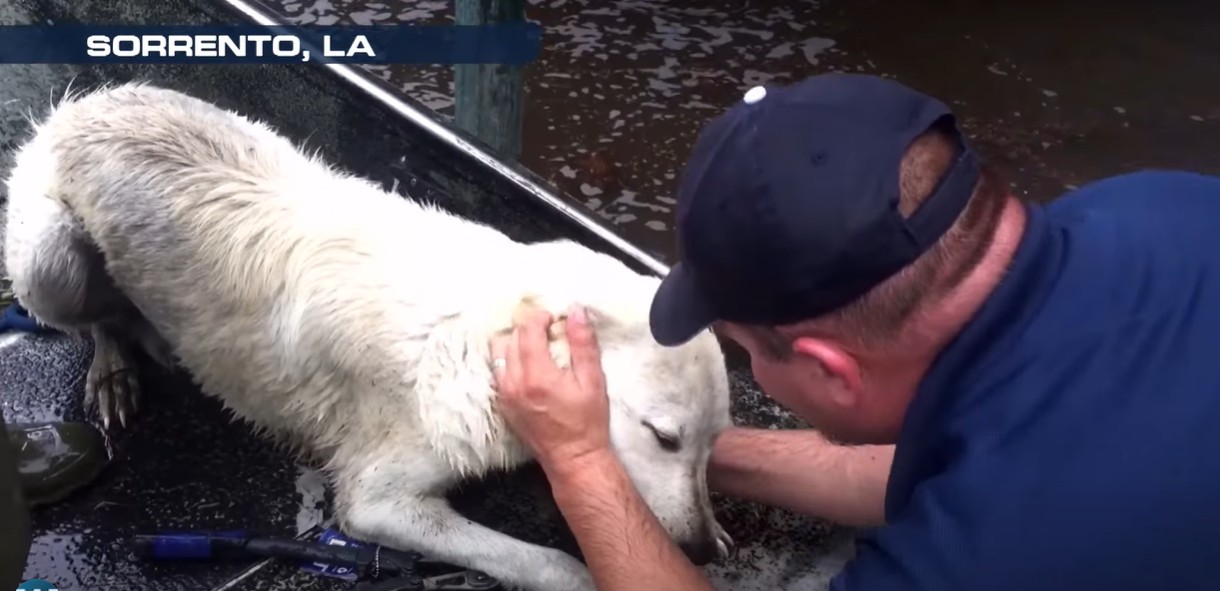
One Journey Helped Animals on Both Ends
The value of the transport extended beyond the dogs who traveled north.
Back in Louisiana, the kennels they left behind could now be used for animals affected directly by the flooding.
That mattered because many incoming pets were not unwanted or abandoned.
They had families.
They had simply become separated during an emergency.
Creating shelter space increased the possibility that those animals could be held safely while owners searched for them.
Meanwhile, the relocated dogs were no longer competing for limited kennel capacity in the middle of a disaster.
They had foster homes and, in some cases, permanent families waiting.
The source describes 22 dogs traveling in the transport van and ultimately refers to 26 dogs helped through the wider rescue effort.
Whatever their individual next steps, the purpose remained the same: move animals already eligible to leave Louisiana shelters so emergency resources could focus on pets caught in the flood crisis.
It was a rescue built on coordination rather than one dramatic moment.
One organization had space.
Another region desperately needed it.
A driver was willing to make a 25-hour journey.
Foster families agreed to open their homes.
Those pieces came together at exactly the time they were needed.
Sometimes Rescue Means Making Room
Floods can change a community in hours.
Homes can become inaccessible. Families can be displaced. Pets can become separated from the people who love them.
Animal shelters often become part of that emergency response, even when they were already caring for animals before the disaster began.
That was why relocating the waiting shelter dogs mattered so much.
Their departure did not mean their lives were more important than the newly displaced pets arriving behind them.
It meant the rescue system was making room for both.
The dogs transported north gained access to foster homes and adoption opportunities.
Louisiana shelters gained additional space for pets whose families could still be searching for them.
And the people in Pennsylvania who opened their homes became part of a disaster response happening more than 1,000 miles away.
The flood caused enormous loss and disruption.
No transport van could undo that.
But for these dogs, the long drive changed what came next.
Instead of remaining inside overcrowded shelters during an escalating emergency, they arrived where people were waiting to welcome them.
Three found permanent homes almost immediately.
The others entered foster care, with safe places to rest while awaiting their own next chapter.
Sometimes rescue begins with someone pulling an animal from immediate danger.
Other times, it begins with something quieter:
Someone noticing that a shelter is running out of room.
Someone offering space from another state.
Someone agreeing to drive for 25 hours.
And someone standing at the other end, ready to open the door.


