
Sometimes the most urgent cries for help come from places people rarely think to look.
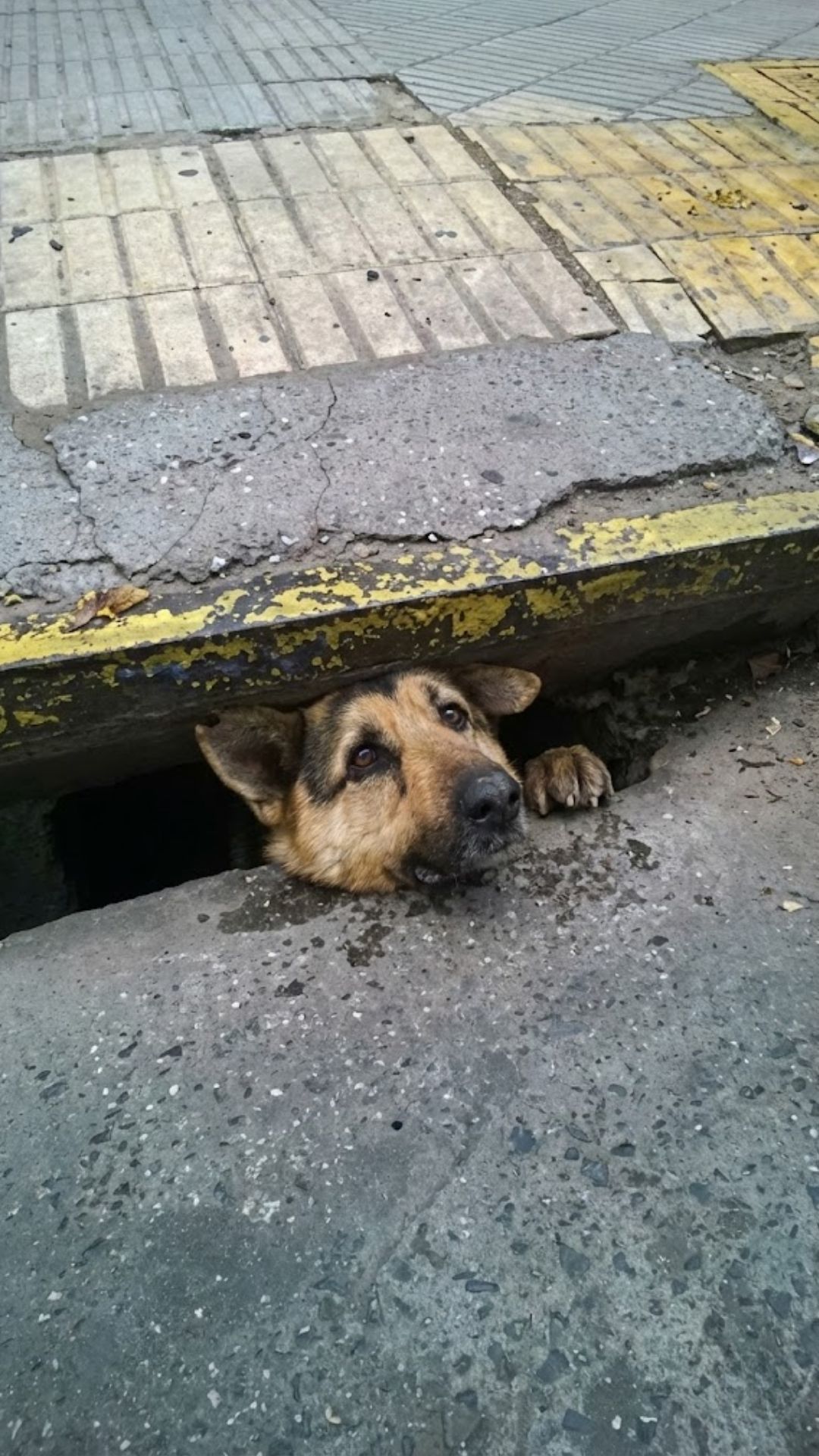
Beneath a street in Bahía Blanca, a dog was trapped inside a narrow sewer system for four days and four cold nights. At certain moments, he could push his head through a small opening in the pavement, reaching the air above while the rest of his body remained confined below.
People passing nearby could see his face.
But he could not see theirs.
The dog was blind.
No one knew exactly how he had ended up underground. He may have fallen into the drainage system, wandered into it, or entered another way and then been unable to find an exit.
Whatever had happened, one fact was clear: he could not escape on his own.
And as the hours became days, the people above him understood that simply noticing him would not be enough.
Voices Reaching Into the Darkness
Before emergency crews arrived, local residents became the dog's first lifeline.
They had heard cries coming from beneath the sidewalk and stopped to investigate. Once they realized an animal was trapped below, they refused to simply walk away.
The heavy concrete covering the sewer made reaching him directly impossible. There was no opening large enough to pull him through, and the confined space beneath the street left very few options.
So the neighbors did what they could.
Through the narrow grate, they lowered food and water.
They spoke to him from above.
The dog could not see the people gathered nearby, but he could hear them. Their voices became one of the few connections he had to the world outside the drain.
For several days, that small effort helped sustain him while residents repeatedly contacted emergency services and Civil Defense.
Keeping him fed was important.
Getting him out was essential.
The sewer was cramped and damp, and remaining there indefinitely was not safe. The people watching over him knew they needed professional help before the situation became even more dangerous.
Their calls continued until help finally arrived.
The Street Itself Had to Be Opened
When rescue personnel reached the intersection of Roca and Terrada streets, they discovered just how difficult the extraction would be.
The dog was stuck deep within a restricted section of the sewer line.
There was no simple way to reach in and lift him out.
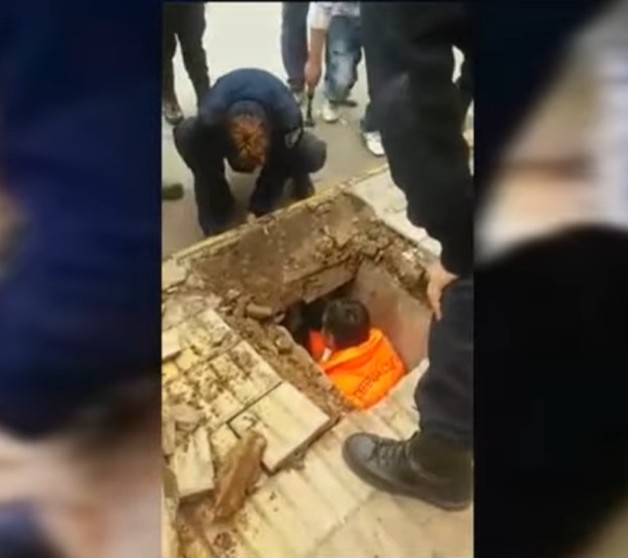
To create an opening large enough to free him safely, rescuers would have to break through the street.
That meant working with heavy tools only a short distance from a frightened animal who could not understand what was happening around him.
For a dog without sight, every vibration and sudden sound would have been impossible to anticipate.
Concrete cracked.
The pavement shook.
Tools struck the surface above him.
Yet amid all that noise, the rescuers kept speaking gently.
One voice could be heard saying, “Tranquilo” — calm down.
Another instruction followed: “Acaricialo” — pet him.
The rescue was not only about removing concrete.
It was also about helping the dog remain as calm as possible while strangers carefully worked their way toward him.
VIDEO: Rescuers Break Through the Street to Reach a Blind Dog Trapped Below for Four Days
A Community Had Already Kept Him Going
The dramatic work in the street was only one part of the rescue.
By the time professionals began breaking through the pavement, neighbors had already spent days making sure the dog was not forgotten beneath it.
They had provided what food and water they could through the limited opening.
They had kept contacting authorities.
And they had remained aware that somewhere beneath their feet was an animal entirely dependent on people he could not even see.
The dog's blindness made the situation especially difficult.
He could not watch rescuers approaching.
He could not see the hands trying to comfort him.
He could only respond to touch, sound, and the movement around him.
As the opening widened, one rescuer reached toward him and gently stroked his head.
That simple contact served an important purpose while the others continued working.
The team had to remove enough material to reach the dog without allowing the tools themselves to place him in further danger.
There was little room for error.
So the work continued carefully, piece by piece.
One Careful Opening Between Him and Freedom
Eventually, the rescuers created enough space.
After four days underground, the dog could finally be lifted from the sewer.
His body was wet and dirty from the confined environment, and his legs trembled after being trapped for so long.
Once above ground, he turned his head anxiously as unfamiliar hands surrounded him.
He still could not see what had changed.
But the concrete walls were no longer pressing around him.
There was open air.
There were people beside him.
And for the first time in days, there was a way forward.
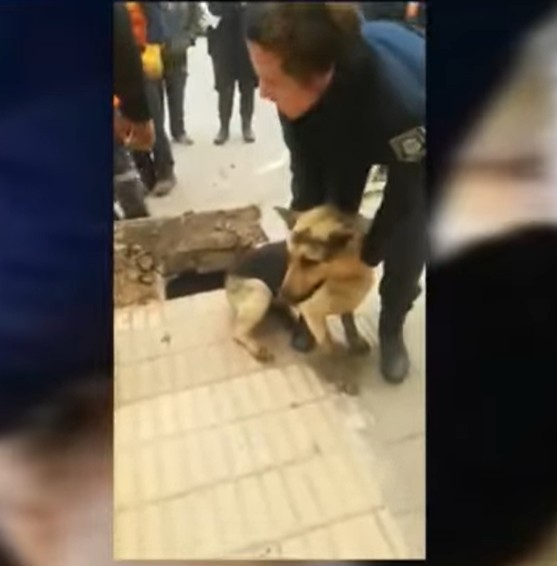
Someone immediately called for water.
“Agua! Ten un bidón de agua!”
Clean water was brought to him, and the dog drank eagerly.
It was a simple moment compared with the effort required to reach him, but it marked something significant.
The struggle beneath the street was over.
He was finally out.
Ninety-Six Hours Beneath the Street
Four days equals 96 hours.
For that entire period, the blind dog had remained inside a place he could not escape and could not visually understand.
The full story of how he entered the sewer was never known.
What became known instead was the story of how people responded once they discovered him.
Neighbors did not dismiss the sounds beneath the pavement.
They found ways to give him food and water.
They continued asking for assistance.
Then rescuers arrived and opened the street itself to bring him back above ground.
It was not one dramatic gesture by one person.
It was a chain of small decisions not to give up.
Someone listened.
Someone looked closer.
Someone brought food.
Someone made another call.
Someone placed a reassuring hand on the dog's head while concrete was carefully removed around him.
Together, those actions gave him the chance to survive.
Safe at Last, but Still Needing a Home
After the rescue, the dog was taken to the local police station, Seccional Segunda, where he could rest, warm up, and receive care.
He had survived four days underground.
He had endured the confined sewer without the ability to see his surroundings.
And after finally being lifted into safety, another question remained.
Where would he go next?
According to the source, the blind dog still needed a home.
His rescue had ended the immediate danger, but his future would depend on finding someone willing to care for a dog who experiences the world differently.
A blind dog may rely heavily on familiar sounds, gentle guidance, and patient human companionship.
During his most frightening hours beneath the street, that guidance came through voices from above and the touch of a rescuer telling him, “Tranquilo.”
Calm down.
Help is here.
He could not see the people working to save him.
But they saw him.
And because they refused to leave him beneath the pavement, four days in darkness finally ended with open air, clean water, and the possibility of a safer life ahead.


