
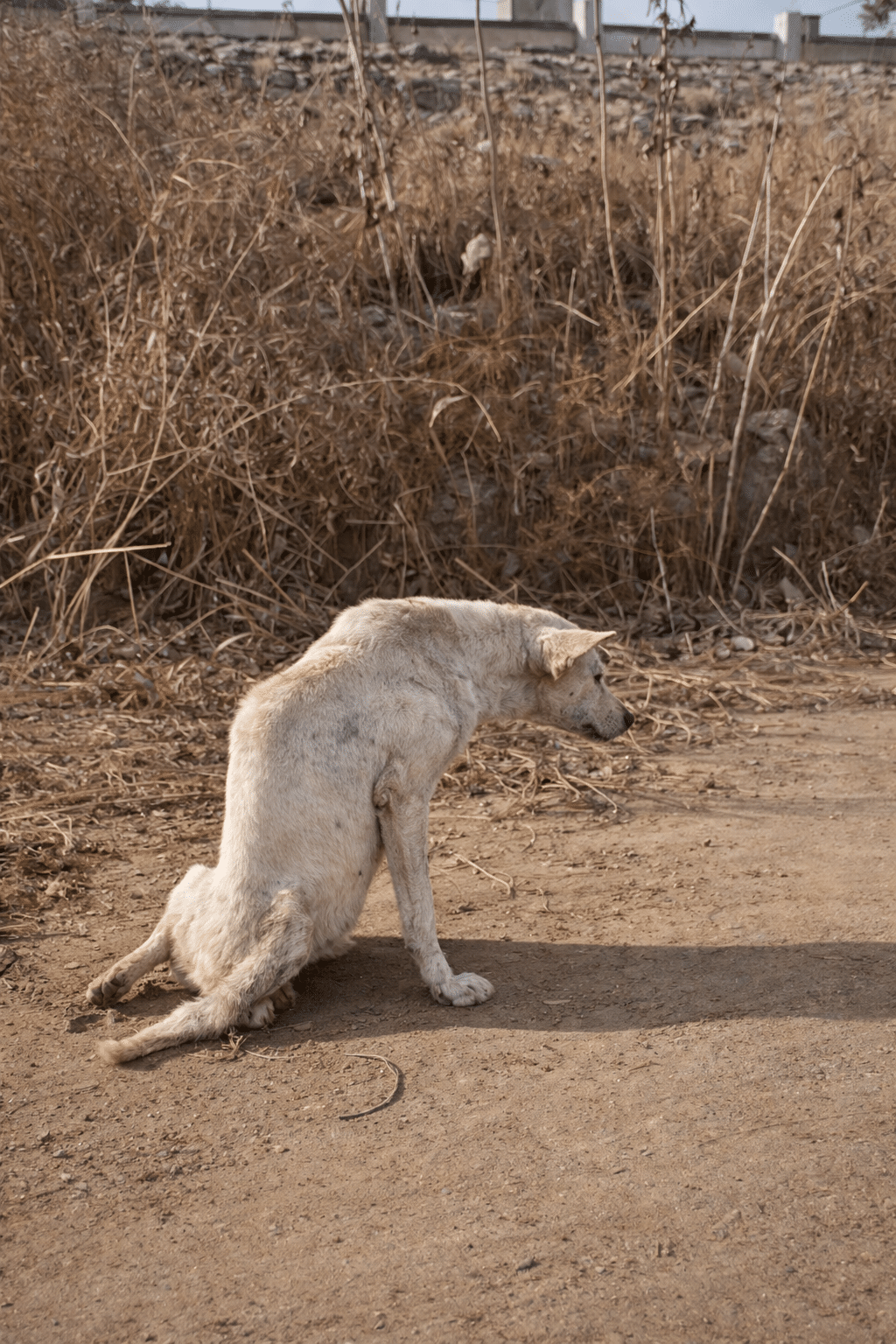
The snow offered him nowhere to hide.
After being struck by a passing car in Astrakhan, Russia, a white dog was left behind with a fractured spine and no movement in his hind legs. The vehicle continued on, and no one immediately stepped forward to help.
He could no longer walk.
Yet somehow, he kept moving.
Using only his front legs, he pulled himself across the frozen ground, dragging the rest of his body behind him. Snow collected in his fur as he searched for whatever scraps he could find.
Every movement demanded effort.
Every small distance had to be earned.
For days, survival meant continuing forward with a body that could no longer move the way it once had.
He might easily have remained another unnoticed animal struggling through a harsh winter.
Then someone finally saw him.
The Moment One Woman Refused to Look Away
Galina ran a small rescue shelter in Astrakhan, and her days were already filled with responsibility.
Hundreds of animals depended on her care. Space was limited, money was always stretched, and there was no shortage of animals already waiting for help.
Taking in another severely injured dog would mean even more work.
But when Galina learned what had happened to him, she did not leave him in the snow.
She chose to help.
That decision brought the dog to a veterinary clinic, where the seriousness of his condition became clear.
His spine was fractured.
Both hind legs were paralyzed.
Untreated injuries had also led to infections that required care.
There was no simple procedure that could suddenly return him to the life he had known before. His future was uncertain, and there were no promises that his rear legs would ever function again.
But one fact remained unchanged.
He was alive.
And as long as he was alive, Galina believed his life was still worth fighting for.
VIDEO: Paralyzed in the Snow, He Kept Crawling Until Someone Finally Stopped to Help
Healing Meant Learning a Completely New Routine
Saving him from the street was only the beginning.
His condition required daily attention, patience, and a level of commitment that would continue long after the first rescue moment had passed.
His injuries needed regular cleaning.
Because of the paralysis, his bladder had to be manually expressed. Pain medication became part of his care, helping him remain as comfortable as possible while his body adjusted to its new reality.
Therapy also began.
Caregivers used careful massage and assisted movement exercises. Acupuncture was included as another attempt to stimulate nerves that might or might not respond.
Nothing came with a guarantee.
There was no dramatic promise that one treatment would make him stand.
Instead, his recovery became a collection of small, repeated efforts.
Care.
Movement.
Rest.
Then the same routine again the next day.
For a dog with a spinal injury, progress could not be measured only by whether he walked again. Comfort mattered. Strength mattered. Preventing complications mattered.
Most of all, giving him a life beyond the frozen street mattered.
Eventually, volunteers arranged something more.
He would travel from Astrakhan to Moscow, where specialized rehabilitation facilities could provide more advanced support.
It was a long journey for a dog whose life had recently been reduced to dragging himself through the snow.
But the people caring for him were no longer thinking about whether he was worth the effort.
That question had already been answered.
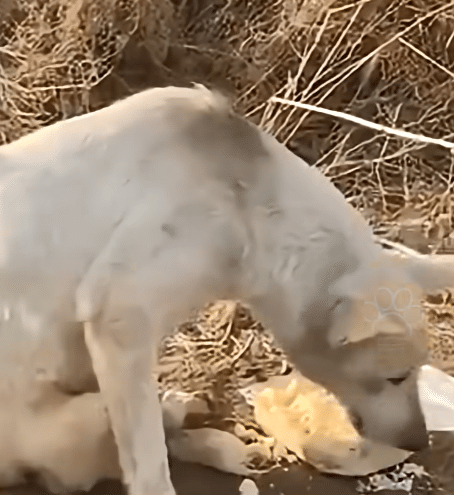
In Moscow, Four Wheels Changed What Was Possible
The next chapter of his life did not begin with his hind legs suddenly moving again.
It began with wheels.
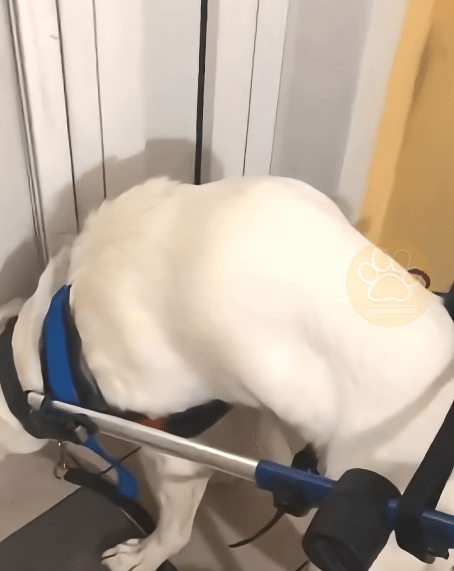
In Moscow, he was fitted with a custom wheelchair designed for dogs living with paralysis in their rear legs.
For the first time, his body had another way to move.
Understanding that new freedom did not happen immediately.
At first, he stood stiffly in the device.
He shifted his weight uncertainly.
His first movements were hesitant as he tried to understand what the wheels beneath him were doing.
After everything he had experienced, learning an entirely different way to move would require patience.
Then, gradually, something began to change.
He started to understand that the wheelchair was not holding him back.
It was carrying the part of him that could no longer support itself.
With his front legs providing the power, the wheels followed.
He learned to move forward.
Then to turn.
Then to stop without losing balance.
Each attempt made the unfamiliar equipment a little less strange.
What once required him to pull his motionless hindquarters across the ground could now be accomplished with far greater ease.
His spine had not been repaired.
His paralysis had not disappeared.
But his world had suddenly become larger.
The Snow That Once Trapped Him Became a Place to Run
There was something especially powerful about seeing him return to the snow.
Earlier, the frozen ground had been part of his struggle.
It was where he had been left after the accident.
It was where he had dragged himself forward, relying entirely on his front legs simply to survive.
Now he was moving across snow again under completely different circumstances.
Supported by his wheelchair, he could travel through open spaces with confidence.
His front legs pushed forward while the wheels carried his hindquarters behind him, leaving two narrow tracks across the white ground.
Soon, those cautious early steps became something much more energetic.
He began to race.
The contrast was impossible to miss.
This was the same dog who had once struggled to move a short distance on frozen pavement.
Now he could cross an open field.
The wheelchair had not restored the body he had before the accident.
It had given him another way to use the strength he still possessed.
That difference mattered.
He did not need to become exactly who he had been before in order to experience movement, curiosity, and freedom again.
His Recovery Was Not a Miracle — It Was a Commitment
Stories about injured animals are often remembered for one dramatic moment.
A rescue.
A surgery.
A first step.
But this dog's journey was different.
There was no sudden cure that erased his spinal injury.
Instead, his progress came through people repeatedly choosing to continue.
Galina chose to take responsibility when she already had more animals depending on her than most people could imagine.
Veterinary care gave him a chance to stabilize.
Daily routines helped manage the challenges created by paralysis.
Therapy gave him opportunities to use the abilities that remained.
Volunteers helped arrange the journey to Moscow.
Specialists provided rehabilitation.
And finally, a wheelchair transformed the way he could interact with the world around him.
None of those individual actions alone created his new life.
Together, they did.
That is what long-term rescue often looks like.
It is not one emotional afternoon followed by an easy ending.
It is returning the next morning.
And the morning after that.
It is continuing care even when progress is slow.
It is finding another solution when the original one is no longer possible.
A Different Kind of Second Chance
In the later footage, the dog moves confidently through fresh snow.
His ears are alert.
His front legs carry him forward while the wheelchair rolls smoothly behind.
The paralysis is still part of his life.
But it no longer defines every movement he makes.
His story does not need to end with a perfect physical recovery to have meaning.
Sometimes healing means regaining what was lost.
Other times, it means learning how to live fully with what cannot be restored.
This dog may never walk on four legs again.
That does not mean his life stopped on the day of the accident.
Because someone noticed him, he was no longer forced to face the cold alone.
Because people remained committed after the rescue, he received continued care instead of a brief moment of sympathy.
And because they were willing to adapt rather than give up, paralysis became a challenge to work around rather than the end of his story.
The image of him crossing the snow says more than any dramatic ending could.
Once, he had to drag himself across that frozen ground just to survive.
Now, wheels beneath him, he can move forward on his own terms.
Not restored to the life he had before.
But given something equally important.
A life that could continue.


