
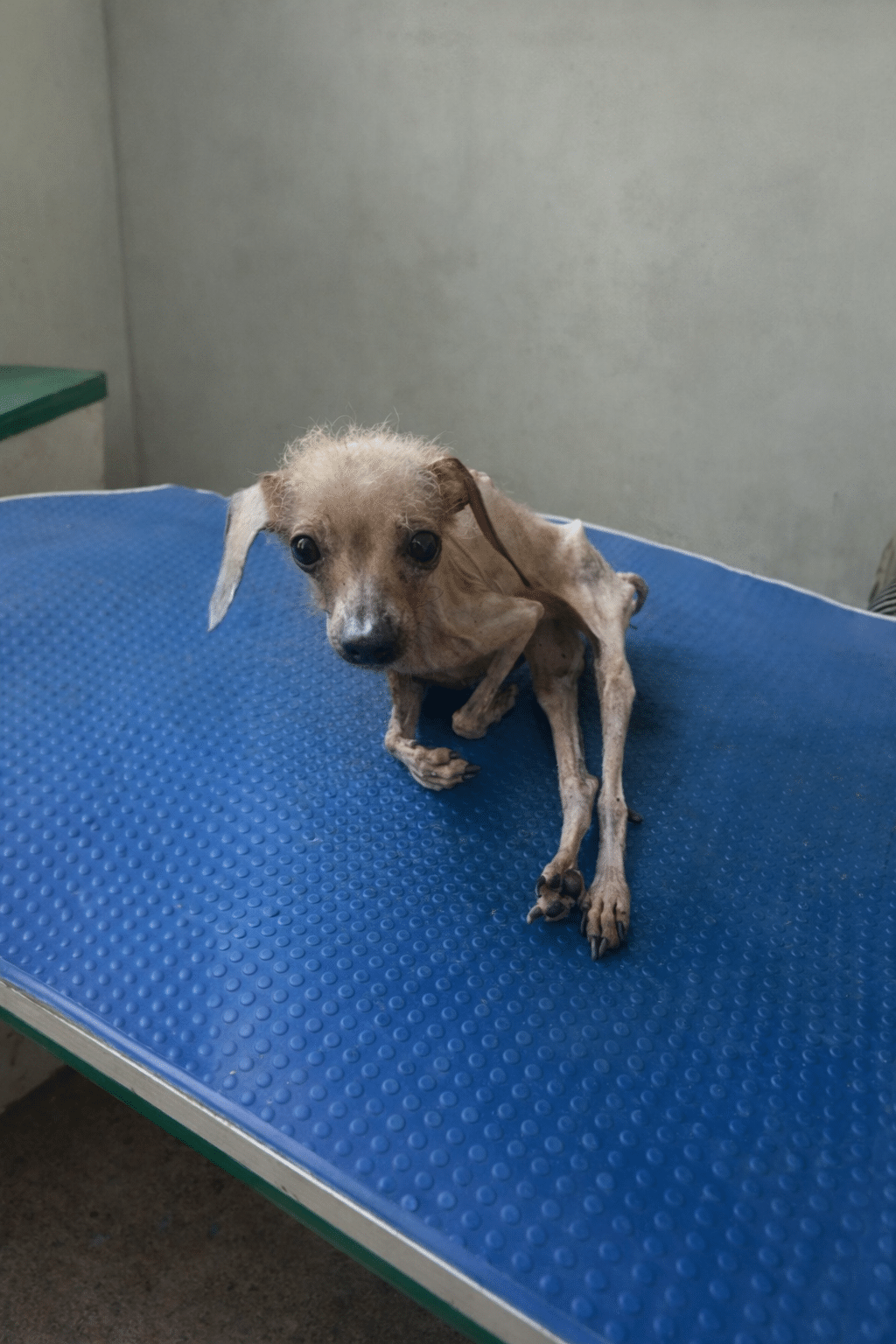
Sometimes survival begins long before recovery does.
When rescuers first encountered Tootsie, she weighed only 2.5 kilograms. Her small body was exhausted, her skin was inflamed, and painful infections affected her ears.
She had been removed from a truck carrying animals toward slaughter.
By the time she reached safety, even the most ordinary parts of being a dog had become difficult. She could barely eat. Running was out of reach. Even barking was something her weakened body could not manage.
But getting Tootsie away from danger was only the beginning.
Her Tiny Body Was Carrying More Than Anyone Could See
Medical examinations revealed why Tootsie was struggling so much.
She had distemper, a serious viral illness that placed another burden on an already weakened body.
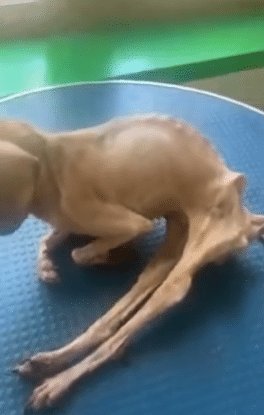
X-rays also showed degenerative changes in her spine. Bone spurs had developed, leaving her stiff and uncomfortable, while her back legs were too rigid and weak to properly support her.
Standing was not simply challenging.
At that stage, she could not do it.
The discomfort became especially noticeable at night, when caregivers could hear her soft cries. There was no instant solution that could erase everything she was facing.
Instead, they stayed close.
Medication became part of her routine. Gentle hands helped keep her comfortable. Her caregivers responded with patience rather than trying to rush a body that had already endured too much.
Every day became about helping Tootsie feel safe enough to face the next one.
VIDEO: Too Weak to Stand, Tootsie Began the Slow Work of Learning Again
Healing Meant Starting With the Smallest Things
There was no sudden transformation.
Tootsie's recovery depended on repeated, careful steps.
Her fur was shaved so her irritated skin could receive proper care. Her ear problems and other infections were treated with medication, while the people around her continued supporting her physically each day.
Acupuncture was also introduced as part of her care.
Because her legs could not yet hold her normally, support equipment helped lift part of her body while caregivers guided her limbs through movement.
The goal was not to force progress.
It was to give her body another opportunity to remember what movement felt like.
Even eating had to be approached slowly.
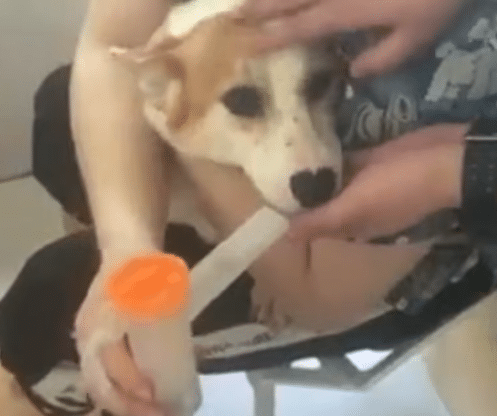
At first, Tootsie did not have enough strength to manage food normally, so she was bottle-fed. It was one more reminder of how far back she had been pushed by illness and exhaustion.
Then the days began to bring small changes.
Nearly a week passed before one especially meaningful moment arrived.
Tootsie ate from a bowl by herself.
For a healthy dog, it would have been completely ordinary.
For her, it was evidence that something inside her was beginning to return.
Standing Became a Victory of Its Own
Eating independently was only one part of the journey.
Her back legs remained stiff, and movement continued to demand enormous effort.
With assistance, however, Tootsie began trying to raise herself.
Her first attempts were uncertain. Her body shook as she pushed upward, relying on support while learning how to carry herself again.
There was no speed in those movements.
There did not need to be.
Each time she managed to remain upright, even briefly, she was practicing something that had once been impossible.
Eventually, supported steps followed.
They were slow and unsteady, but they were hers.
Recovery stories are often remembered through dramatic before-and-after images. Tootsie's progress was different.
Much of it happened in moments that could easily have seemed small from the outside.
Eating from a bowl.
Holding herself upright.
Moving one stiff leg forward.
Trying again after resting.
Those moments mattered because nothing came easily to her.
Her body still had limitations, yet she continued participating in the work of recovery whenever she could.
She No Longer Had to Recover Alone
After her treatment and isolation period ended, another important change came.
Tootsie was moved into a shared rescue space.
Until then, much of her world had revolved around medical care, physical support, and the quiet routine of healing.
Now there were other dogs around her.
They, too, had survived difficult circumstances and were learning what safety could feel like.
For Tootsie, the new environment meant that recovery was no longer something happening in isolation.
There were other animals nearby.
There was warmth.
There was a protected place to rest.
And perhaps most importantly, there was time.
No one expected her to become strong overnight.
No one demanded that her body move faster than it could.
Progress Was Measured Differently for Tootsie
Some dogs arrive in rescue needing food and shelter before quickly moving on to the next stage of their lives.
Tootsie's needs were more complicated.
She was recovering while also adapting to physical limitations that did not disappear simply because she had reached safety.
That made patience essential.
A difficult day did not erase a better one.
A stiff leg did not make an earlier step meaningless.
Needing support did not mean she had failed.
Her caregivers continued helping her through the process without treating recovery like a race.
That approach allowed the smallest improvements to count.
When a dog has struggled even to eat, finishing food independently matters.
When standing has been impossible, lifting the body upright matters.
When movement brings discomfort, choosing to try another step matters.
Tootsie's story was built from those quiet achievements.
A Second Chance Does Not Have to Look Perfect
Tootsie's journey was never about becoming a completely different dog overnight.
It was about receiving the opportunity to keep going.
She entered rescue at only 2.5 kilograms, unable to stand and facing several serious health challenges at once.
What followed was not a single dramatic turning point.
It was care repeated day after day.
Medicine.
Supported movement.
Acupuncture.
Help with eating.
Rest.
Encouragement.
And eventually, small signs that her body was responding.
Her road remained difficult, but she was no longer facing it without help.
That may be the most meaningful part of her story.
Rescue did not erase every problem Tootsie had.
It changed the conditions around those problems.
Instead of danger, there was safety.
Instead of being left to struggle alone, there were people willing to support her.
Instead of expecting immediate results, there was patience.
Tootsie began with a body that could barely manage the basics.
Then came one meal.
One attempt to stand.
One supported step.
And another.
Her progress was slow because it needed to be.
But every small movement carried the same quiet message:
She was still trying.
And this time, she had others helping her move forward.


