
Sometimes the smallest movement can carry an enormous message.
For Murray, it was a tail wag.
He was lying on a veterinary exam table after surviving conditions that had already pushed his young body close to its limit. The decision had nearly been made to end his suffering.
Then Murray looked up.
His tail moved.
And the people standing beside him could no longer see only how sick he was. They saw a puppy who still had something left to give.
A Puppy Found Where Too Many Dogs Were Forgotten
Murray was only about 12 weeks old when he and three siblings were found on Dead Dog Beach in Puerto Rico, a place known for abandoned animals.
For such a young puppy, he had already faced an extraordinary amount of hardship.
Murray had contracted distemper, a serious viral illness that can affect a dog's nervous system. His condition was severe, and his chances of recovering appeared painfully small.
The situation became so difficult that the founder of The Sato Project and a local veterinarian faced the decision no rescuer wants to make.
They considered euthanasia to prevent Murray from continuing to suffer.
He was placed on the examination table.
There was little reason to expect what happened next.
Murray lifted his head and looked toward the people around him.
Then his tail wagged.
It was only a small gesture, but in that quiet room it meant everything.
The veterinarian stopped.
Whatever Murray's body had endured, there was still unmistakable life in him. That brief movement was enough to change the course of his story.
Instead of saying goodbye, they chose to give him more time.
And Murray took that chance.
VIDEO: One Tail Wag Saved Murray’s Life — The Puppy Who Refused to Give Up
Survival Left Its Mark
Murray survived distemper, although one of his sisters did not.
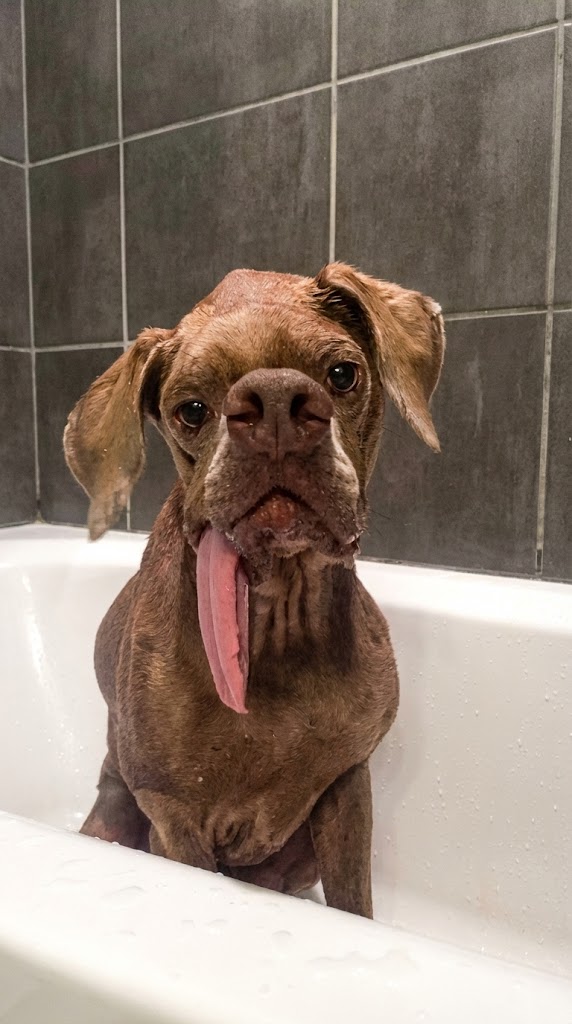
Recovery did not mean returning to the body he might have had before the illness. Distemper affected his development and permanently changed the shape of his face.
His skull became flatter than usual, giving him the crooked appearance that would eventually make him instantly recognizable.
His dental problems were also severe enough that his teeth had to be removed.
Without them to hold his tongue in place, the pink tongue often rests outside one side of his mouth.
The result is a face unlike almost any other dog's.
Murray has also experienced seizures, another reminder that surviving a serious illness does not always mean escaping every lasting effect.
Someone seeing him for the first time might notice the unusual shape of his face before anything else.
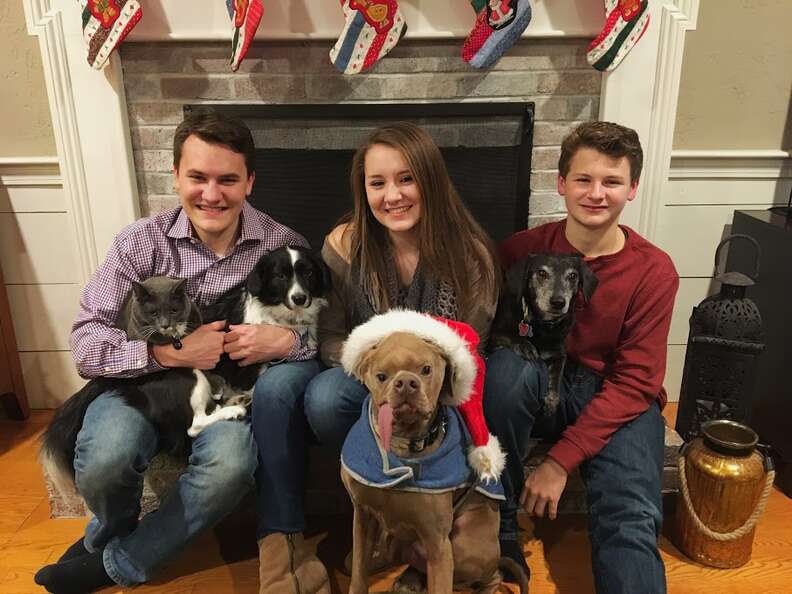
But the Gallant family saw something very different.
They saw Murray himself.
They saw a dog who was alive, affectionate, and capable of enjoying the ordinary comforts that once seemed so uncertain.
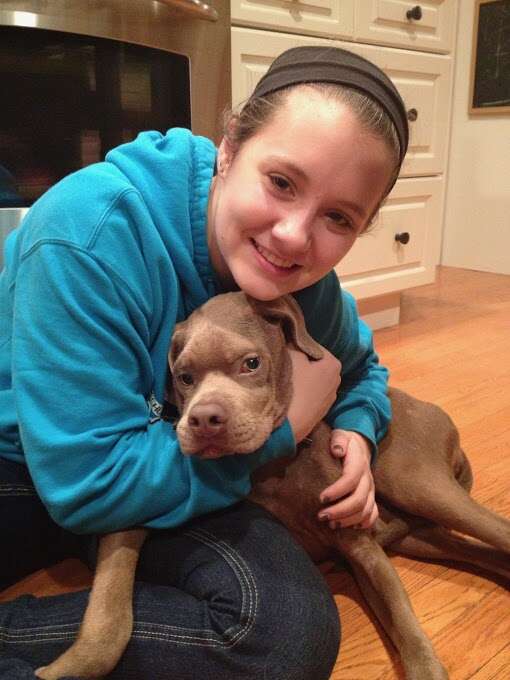
Shortly before Christmas, Mackenzie Gallant and her family adopted him.
For a puppy who had once been abandoned on a Puerto Rican beach and later came close to losing his life on an examination table, the change was enormous.
Murray had a home.
More importantly, he had people who did not need him to look like every other dog in order to love him.
The Little Routines That Became His New Life
The strongest evidence of how completely Murray became part of the Gallant family can be found in the ordinary details of daily life.
He developed routines.
He had favorite places.
He learned exactly where he belonged at bedtime.
Mackenzie described Murray as her favorite dog and said he slept in her room every night.
When someone told him, “Murray, it’s time for bed,” he knew exactly what that meant.
He would run upstairs and wait to be tucked in.
It was a simple family ritual.
Yet compared with the beginning of Murray's life, there was something remarkable about it.
The puppy once found without security now expected a pillow, a blanket, and a familiar room waiting for him.
Safety was no longer an occasional act of kindness.
It had become normal.
Distance Could Not Break Their Bond
Eventually, Mackenzie left home for college.
For many dogs, a familiar family member suddenly disappearing from the daily routine can be a major change. But Mackenzie and Murray found a way to remain connected.
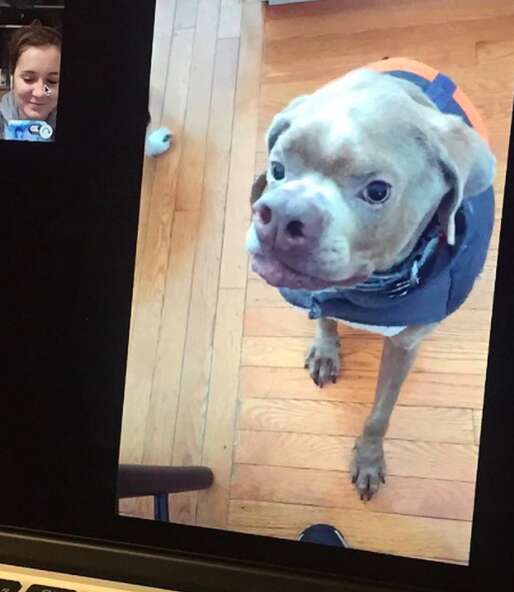
They began seeing each other through FaceTime.
Mackenzie's mother also continued placing Murray's pillow and blanket in Mackenzie's room at night, preserving the sleeping routine that made him comfortable.
The physical distance had changed.
The relationship had not.
Murray's personality also became impossible to separate from family life.
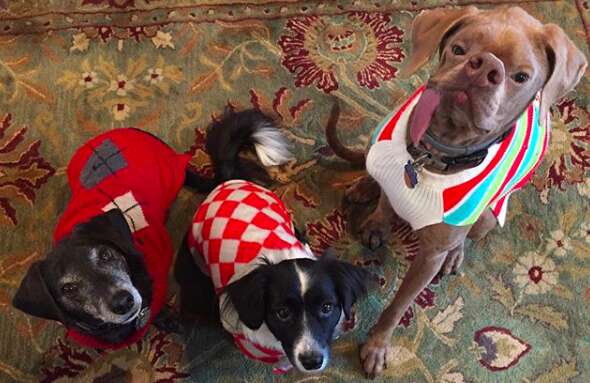
He shared the home with two other dogs, Pili and Fox.
One particular word could quickly get all of them excited: “walk.”
When they heard it, Murray joined the others in a chorus of enthusiastic howls and energetic movement.
It was another ordinary moment that carried extraordinary meaning.
This was the same dog whose future had once been measured in minutes on a veterinarian's table.
Now his days included walks, bedtime routines, canine siblings, family attention, and the anticipation of familiar pleasures.
He Never Needed a Perfect Face
Murray's appearance remains different.
His face is crooked.
His tongue hangs from the side of his mouth.
Those features are permanent parts of him.
But the Gallant family never treated them as reasons to see Murray as less worthy of affection.
If anything, they became part of the face they loved.
There is an important distinction in Murray's story.
His life did not become meaningful because he somehow returned to a conventional idea of physical perfection.
He never needed to.
The illness changed his body, but it did not prevent him from forming relationships, building routines, enjoying walks, or becoming deeply attached to the people around him.
The things that once made him look unusual became inseparable from the dog his family knew.
His tilted expression.
His tongue.
His unmistakable face.
His howl.
His bedtime habits.
Together, those details formed a personality no one in the household wanted to change.
What Murray's Journey Quietly Reveals
Rescue stories are sometimes reduced to a single dramatic moment: an animal is found, someone intervenes, and the danger passes.
Murray's life shows how much comes afterward.
Saving him on that examination table was only one decision.
Giving him medical care was another.
Adopting him was another.
Then came thousands of ordinary choices that transformed rescue into belonging: preparing his bed, taking him on walks, including him with the other dogs, answering his needs, and making space for his unusual appearance without treating it as a flaw.
His survival also challenges the instinct to judge an animal's future by the condition in which that animal is first seen.
Murray once appeared to have very little chance.
The illness had already taken one sibling, and his own condition was serious enough that euthanasia was being considered.
Yet the future that followed included something no medical assessment on that difficult day could fully measure.
A family would eventually consider him irreplaceable.
That may be the most powerful part of Murray's story.
A life can look fragile without being finished.
A body can carry permanent differences and still contain enormous joy.
And an animal does not need to meet anyone's idea of perfection to become the perfect companion for the people who love him.
From Dead Dog Beach to the Center of a Family
Murray's story began in a place associated with animals who had been discarded.
It nearly ended on an examination table.
Instead, one small tail wag opened the door to another possibility.
Years later, the details of his life are no longer defined mainly by where he was found or how close he came to being euthanized.
They are defined by home.
By Mackenzie's room.
By his pillow and blanket.
By FaceTime calls.
By Pili and Fox.
By the excitement that follows the word “walk.”
And by a family that learned to recognize beauty in a face the world might have called imperfect.
Murray did not survive and then become someone else.
He survived and was allowed to be exactly who he was.
His crooked face still tells part of the story.
His hanging tongue still hints at everything his body endured.
But neither explains him completely.
The fuller story is found in the dog who runs upstairs at bedtime, joins his siblings in excited howls, and continues to occupy a deeply loved place in his family's life.
A long time ago, when Murray had almost no future left, he lifted his head and wagged his tail.
Someone noticed.
Someone changed their mind.
And because they did, Murray eventually found the place where all of his differences fit perfectly.


