
Sometimes survival begins with something as small as being heard.
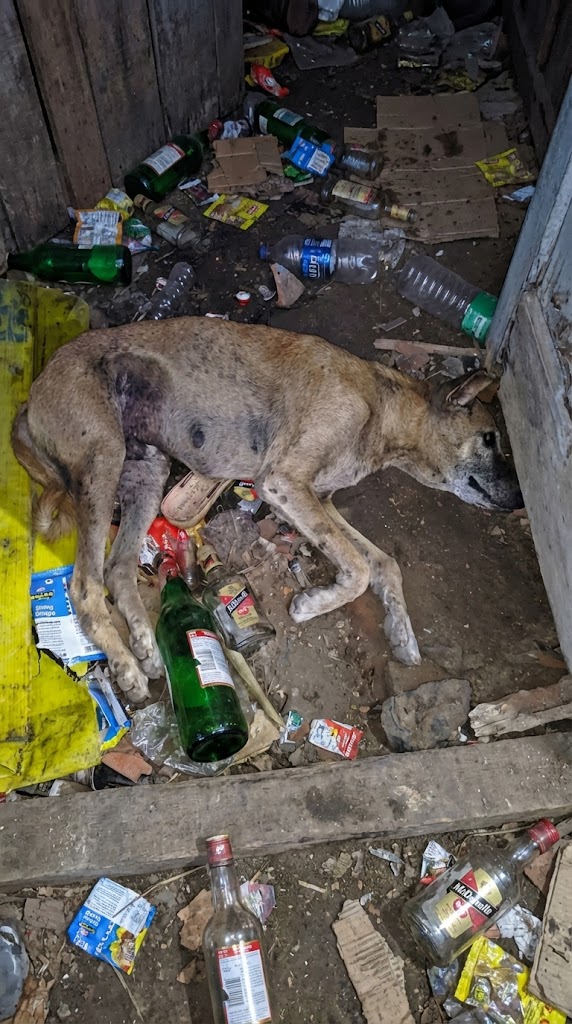
Glimmer was lying almost hidden among the debris in a garbage-strewn lot when nearby residents began noticing a weak, repeated cry. His body had suffered serious trauma, although exactly what had happened to him was unknown.
He could not stand.
He could not lift his head.
Even the smallest movement seemed beyond him.
Yet while his body could barely respond, Glimmer was still able to make one thing known: he was there, and he needed help.
A Weak Cry That Someone Finally Followed
No one knew how long Glimmer had been lying in that corner of the lot.
He was easy to miss among the rubbish, and his condition left him unable to move himself toward safety. But the sounds he made continued to reach people nearby.
Eventually, residents realized the cries were coming from an animal in distress.
They followed the sound.
What they discovered was a dog in extremely poor condition, lying helpless and unable to rise. The cause of his injuries was not clear, but it was obvious that he needed help quickly.
The residents contacted rescuers.
When help arrived, Glimmer was still largely motionless. The suffering visible in his face made the situation especially difficult to witness. He was not described as an elderly dog, yet his exhausted appearance made him seem as though he had already endured far too much.
For Glimmer, simply being discovered became the first turning point.
Until then, he had been alone with an injury that prevented him from escaping on his own.
Now, someone had heard him.
And someone had come.
The Examination Revealed a Difficult Road Ahead
At the hospital, the medical team began trying to understand why Glimmer could not move normally.
There were no obvious fractures, according to the source. The greater concern involved serious damage to the nerves around his spine.
The pain appeared severe.
Glimmer could not reposition himself normally, and he was unable to eat independently. Almost everything had to be done for him while his body remained still.
His emotional condition worried the people caring for him as well.
He showed very little interest in what was happening around him, and rescuers feared that the combination of pain, immobility, and exhaustion was causing him to withdraw.
This was not going to be a recovery measured in hours or a few easy days.
What Glimmer needed most was patience.
VIDEO: Unable to Stand or Lift His Head, Glimmer’s Cries Finally Brought Help
Six Weeks Where Rest Became Part of the Treatment
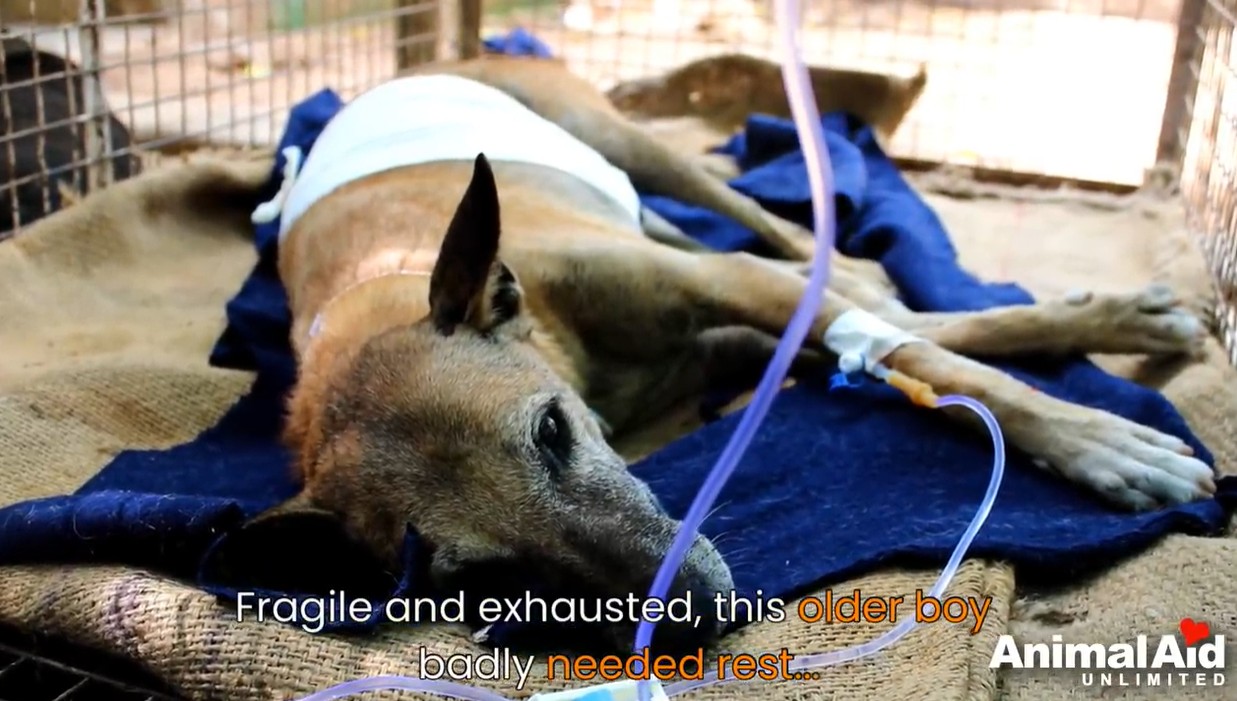
The medical plan called for six weeks of strict bed rest.
There would be no attempt to rush Glimmer back onto his feet.
His body needed time for the swelling around the affected area to ease and for the injured nerves to have an opportunity to recover.
That meant waiting.
For the first two weeks, there was little outward progress to celebrate.
Glimmer remained almost entirely still. His eyes often looked heavy, and every meal required assistance. Caregivers hand-fed him patiently so he could continue receiving the nourishment he needed while resting.
Recovery can be difficult to recognize when it happens beneath the surface.
There were no dramatic steps across the room.
No sudden return of strength.
No clear sign that the weeks of stillness were working.
There was only careful feeding, constant observation, and time.
For the people caring for Glimmer, those quiet days demanded trust in a process they could not yet see.
His body had suffered significant trauma. Asking too much of it too soon could have worked against the very healing they were hoping for.
So they continued.
Meal after meal.
Day after day.
Glimmer rested while his caregivers did the small, repetitive work necessary to keep him comfortable and supported.
Then Glimmer Did Something No One Had Seen Him Do
By the third week, the long stillness finally gave way to a change.
Glimmer sat up.
It was not a dramatic movement.
For a healthy dog, sitting is ordinary—something done without thought countless times a day. But for Glimmer, who had arrived unable even to lift his head properly, that simple action carried enormous meaning.
His body had responded.
After weeks of almost complete immobility, he had managed to support himself in a new position.
It was the first clear indication that the recovery process might be taking hold.
One movement could not erase everything Glimmer had been through, and it did not mean the difficult work was finished.
But it changed the atmosphere around his recovery.
Until that moment, everyone had been caring for a dog whose future remained painfully uncertain.
Now there was something visible to hold onto.
Glimmer had sat up on his own.
And once movement began to return, more progress followed.
From Stillness to the Sound of Paws Again
As the days passed, Glimmer gradually regained strength in his legs.
His posture improved.
His expression became brighter.
The dog who had once been unable to move among the debris was beginning to rediscover the ordinary motions that had seemed impossible only weeks earlier.
Each improvement built upon the last.
First came sitting.
Then greater strength.
Then the ability to move more confidently.
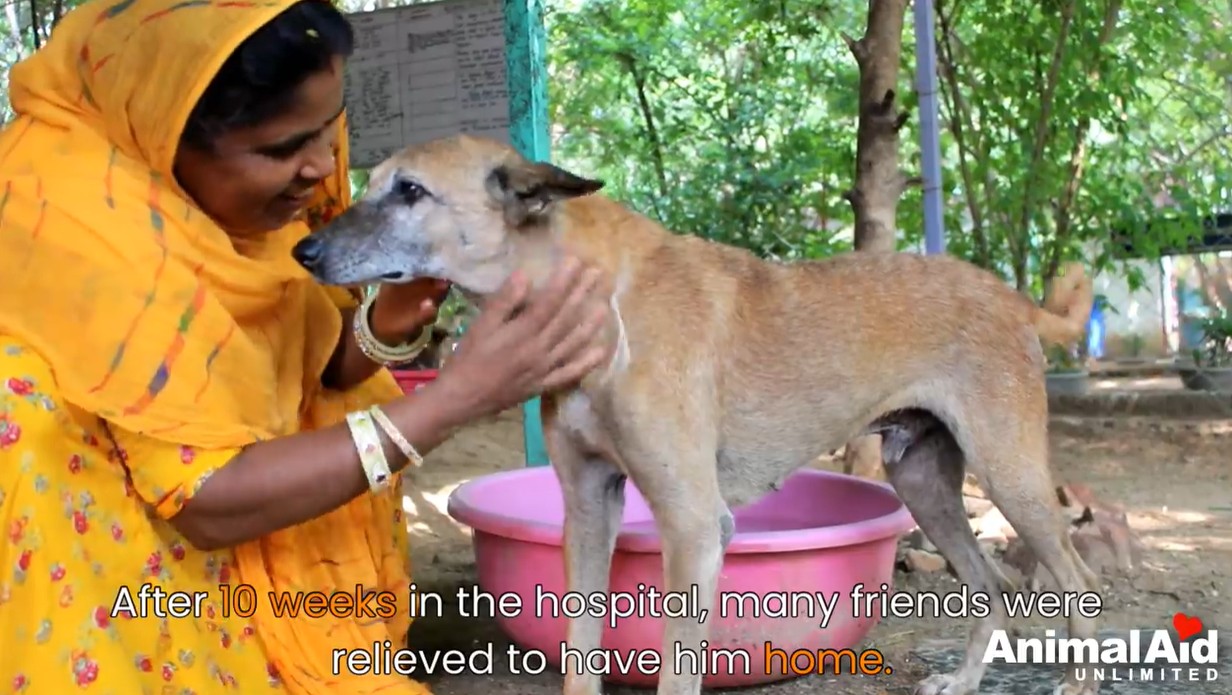
Eventually, Glimmer was walking again.
The contrast was remarkable.
The sound that had once defined his story was a faint cry coming from somewhere inside a rubbish-filled lot.
Later, there was another sound around him instead—the light rhythm of paws moving across the clinic floor.
His caregivers described his movements with an affectionate word.
Glimmer seemed to be dancing.
It was a simple way of capturing how far he had come.
Not long before, his body had been almost completely still.
Now he had enough strength not only to stand and walk, but to move with the energy of a dog whose personality was returning along with his mobility.
What His Recovery Quietly Teaches
Glimmer’s story did not change because of one extraordinary medical moment.
It changed through a chain of smaller ones.
First, people noticed a sound that could easily have been ignored.
Then rescuers responded.
Medical professionals recognized that his body needed rest rather than pressure.
Caregivers continued feeding and supporting him through weeks when progress was almost impossible to see.
And finally, Glimmer sat up.
That sequence matters because recovery does not always look impressive while it is happening.
Sometimes healing is simply a dog resting in the same place for another day.
Sometimes it is another carefully offered meal.
Sometimes the first real victory is not running across a room.
It is sitting.
Glimmer also leaves behind another reminder: noticing matters.
He could not walk out of the lot.
He could not search for help.
All he could do was make himself heard.
The people who listened gave that weak cry a chance to become something very different.
The Dog Who Once Couldn’t Move Is Full of Life Again
Today, Glimmer is described as a bright, happy dog with energy and personality.
That outcome feels especially meaningful when compared with the way his story began.
He was found unable to stand, unable to lift his head properly, and dependent on others for even the most basic care.
There was no certainty in those first days.
There was only a seriously injured dog, a medical plan built around patience, and people willing to stay with him through the long quiet stretch when nothing seemed to be changing.
Then came one small movement.
Glimmer sat up.
From there, the dog who had once lain helpless among discarded debris slowly found his feet again.
His story is not a promise that every recovery will follow the same path.
It is something gentler than that.
It is proof that sometimes progress begins before anyone can see it—and that when someone listens, responds, and gives healing enough time, a life that seemed almost motionless can begin moving forward again.


