Some lives begin with advantages.
Others begin with obstacles so large that simply surviving already feels like a kind of miracle.
Born Into the Second Category
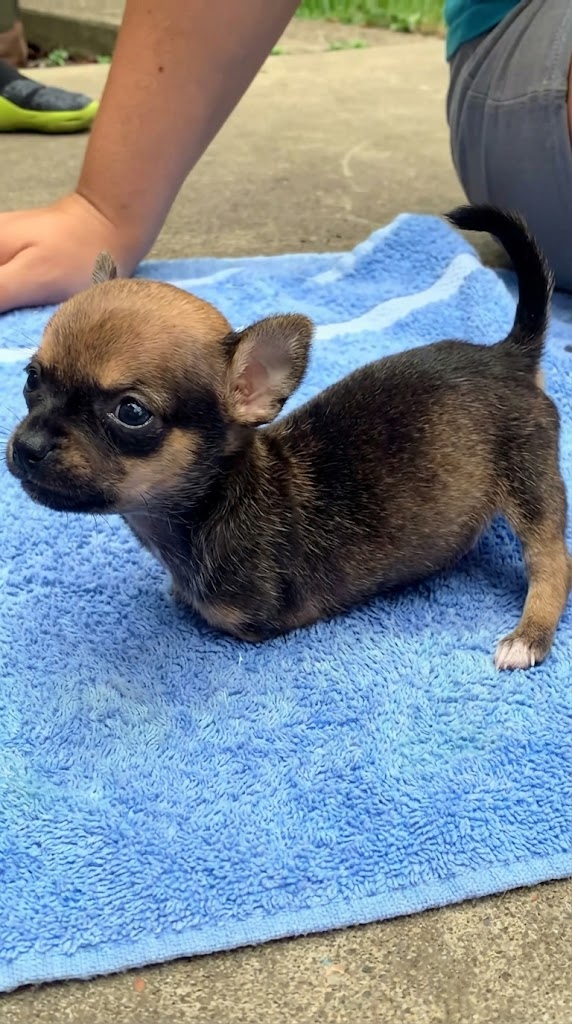
A Chihuahua no bigger than a teacup, Turbo Roo entered the world missing both of his front legs. To most people looking at him, his future would have seemed painfully limited — a fragile puppy facing a life defined by struggle and dependence.
But Turbo never seemed to see himself as incomplete.
He only knew one thing, from the very beginning: he wanted to move.
A Puppy Who Refused to Slow Down
At just six weeks old, his first owner realized she couldn’t provide the specialized care he would need, and made the difficult decision to surrender him to a veterinary clinic. That decision, as it turned out, changed everything for him.
It was there that Ashley, a veterinary technician, met the tiny puppy who wouldn’t sit still. She didn’t look at him and see a disability. She saw determination — raw, stubborn, and impossible to miss. And she fell in love with him almost instantly.
VIDEO: Turbo Roo’s First Steps Toward an Impossible Dream
A Toy, a Technician, and an Unbreakable Will
For a puppy with only two legs, the world isn’t exactly built with him in mind.
While other puppies wrestled and raced around the room, Turbo dragged himself forward, inch by determined inch. Ashley spent countless hours encouraging him along the way, using small pieces of food as motivation and cheering every tiny bit of progress like it was a real victory — because, in its own way, it was.
Turbo was relentless. Frustrated at times, endlessly stubborn, and completely fearless.
There was just one problem: no company made mobility carts small enough for a puppy his size, and most wouldn’t even consider building one until he was at least six months old.
Waiting simply wasn’t an option that felt right.
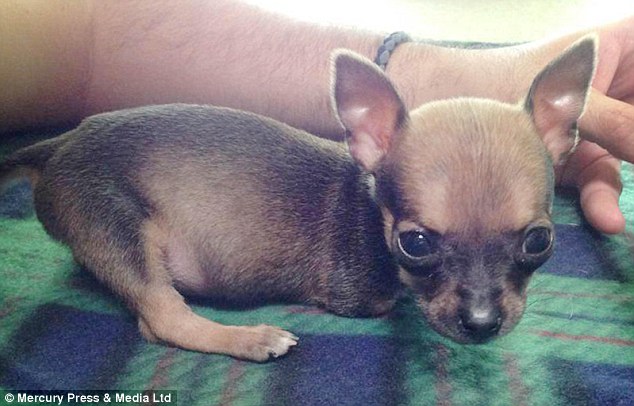
So Ashley and the clinic staff became inventors, almost overnight. They dug through spare parts, tested different ideas, watched some of them fail, and tried again anyway. Turbo’s very first set of wheels was built out of the remains of an old toy helicopter.
It wasn’t elegant. It certainly wasn’t perfect.
But it worked. And more than that, it told Turbo something important: that he was worth the effort it took to build it.
When Engineering Meets Empathy
Photos of the tiny dog rolling around on his homemade wheels began circulating online. What had started inside a quiet clinic soon reached thousands of screens around the world.
One of those screens belonged to Mark Deadrick, an aerospace engineer based in San Diego.
The moment Mark saw the photo, he knew he could build something better. Using advanced 3D-printing methods normally reserved for aircraft design, he created a lightweight cart custom-built for Turbo’s small frame — no measurements requested, no payment expected. Just a problem he wanted to help solve.
Days later, a package arrived at the clinic. Inside was a sleek, custom-built set of wheels fitted with smooth rollerblade bearings, engineered for speed, balance, and freedom of movement.
At first, Turbo hesitated. Rolling felt unfamiliar. The ground beneath him felt different than it had before.
Then, one evening, as the sun dipped low, Ashley brought out her other dog to play with him.
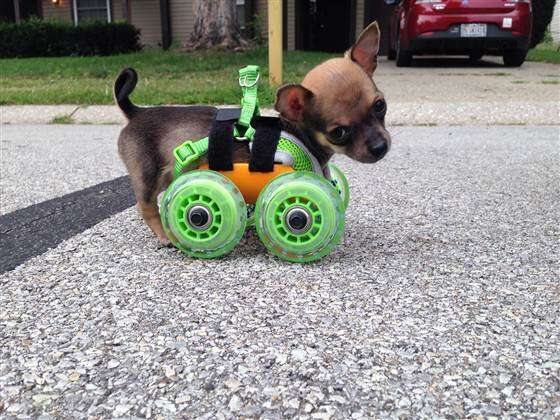
Something shifted.
Turbo ran.
Not scooting. Not straining to keep up.
Running — fast, free, and seemingly unstoppable.
Beyond Labels and Limitations
Today, Turbo Roo isn’t really known as a “disabled dog.”
He’s just Turbo.
He leaps onto the couch without hesitation. He plays tug-of-war with sheer stubborn determination. He keeps pace easily with his big brother, Braxton the Puggle, without ever seeming to notice a difference between them. His personality takes up far more space than his small body ever could.
From Indianapolis to New York City, from Ohio all the way to Argentina, his story has reached and inspired hundreds of thousands of people around the world. As Turbo grows, his wheels keep evolving too — new designs already in progress, lighter and stronger, shaped to fit his changing body. His life has become one steady, ongoing upgrade.
The Lesson Rolling Beside Him
Turbo Roo’s story isn’t really about missing legs.
It’s about perspective.
He never needed to be “fixed.” He simply needed people willing to imagine what could still be possible, instead of focusing only on what wasn’t there.
His journey is a quiet reminder that technology matters most when it’s used to support the vulnerable. That a disability was never meant to be treated as a destiny. And that kindness, once it starts moving, tends to travel farther than distance alone ever could.
Watch Turbo today, wheels spinning as he sprints across the grass, and it becomes hard to notice what he’s missing at all.
All that’s really visible is joy. Motion. A life quietly saved by people who simply refused to look away.
Turbo Roo didn’t just learn how to move.
In his own small, determined way, he taught a lot of people how to keep going — even when the odds seem stacked against them.